

What Is Cyber Liability, and How Is It Different from Cybersecurity?
Cybersecurity and Cyber Liability are connected, but they are not the same thing.
That distinction matters because an accounting or tax firm can have firewalls, endpoint protection, backups, multifactor authentication, and an IT provider—and still carry significant Cyber Liability.
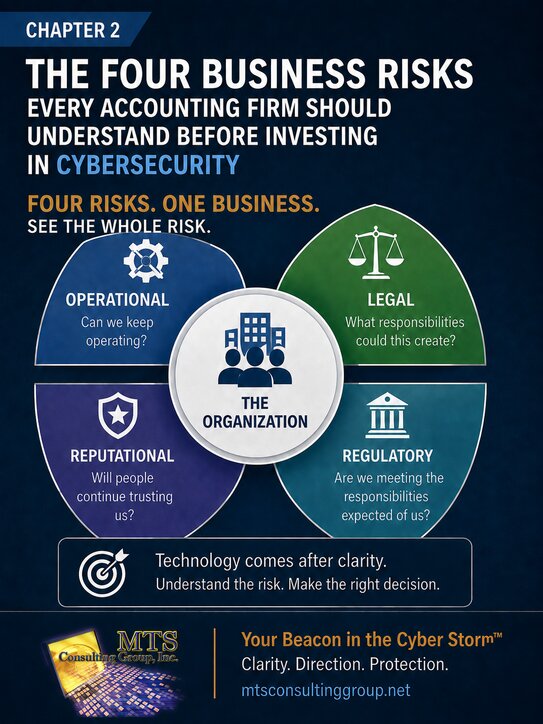
What Are the Four Business Risks Every Accounting Firm Should Understand Before Investing in Cybersecurity?
Before an accounting or tax firm invests in cybersecurity, leadership should understand four areas of business risk: Operational, Legal, Reputational, and Regulatory.
A firewall, backup system, multifactor authentication, employee training, monitoring service, or other cybersecurity control only has value when it helps reduce a real business exposure.
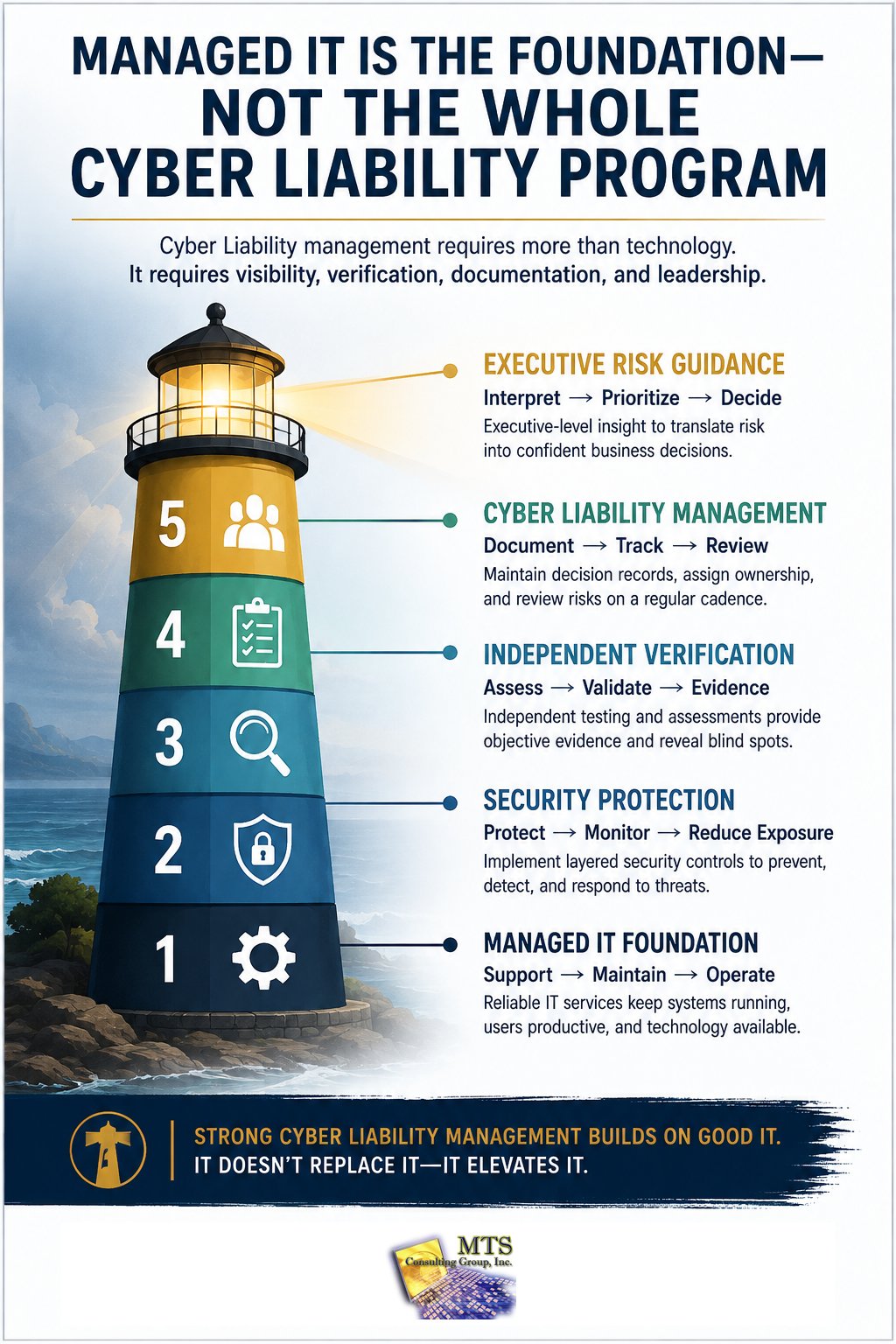
Why Doesn’t Traditional IT Support Fully Address Cyber Liability?
Traditional managed IT is essential, but it does not, by itself, address the full Cyber Liability of an accounting or tax firm.
Managed IT is the foundation. It is not the full Cyber Liability program.
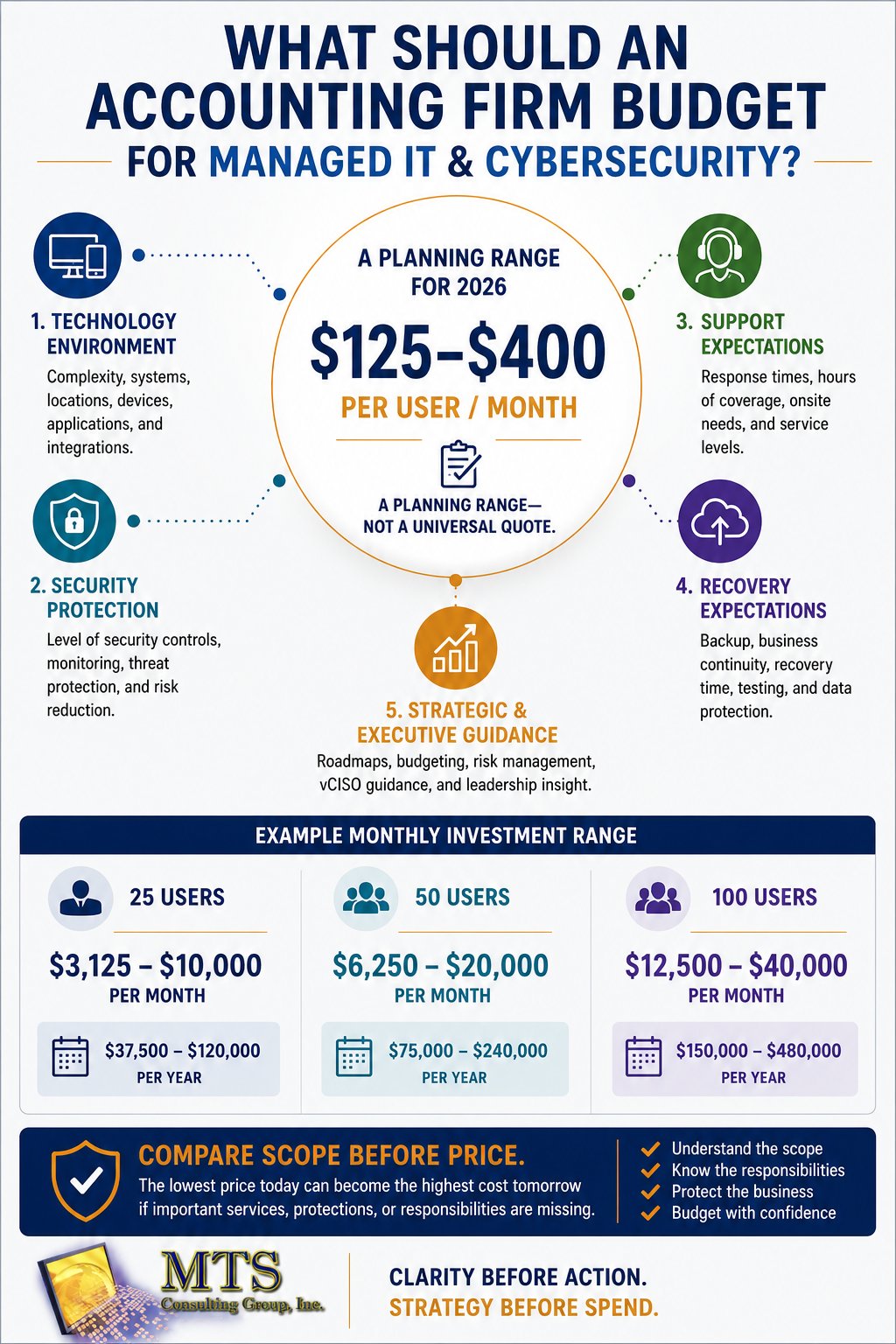
How Much Should an Accounting Firm Budget for Managed IT and Cybersecurity in 2026?
For a small to midsize accounting or tax firm, a reasonable planning range for managed IT and cybersecurity is approximately $125-$400 per user per month, depending on the firm’s technology environment, security requirements, services included, risk profile, and level of strategic guidance.
It should be to understand what you are buying, what you are not buying, and what Cyber Liability remains with the firm.
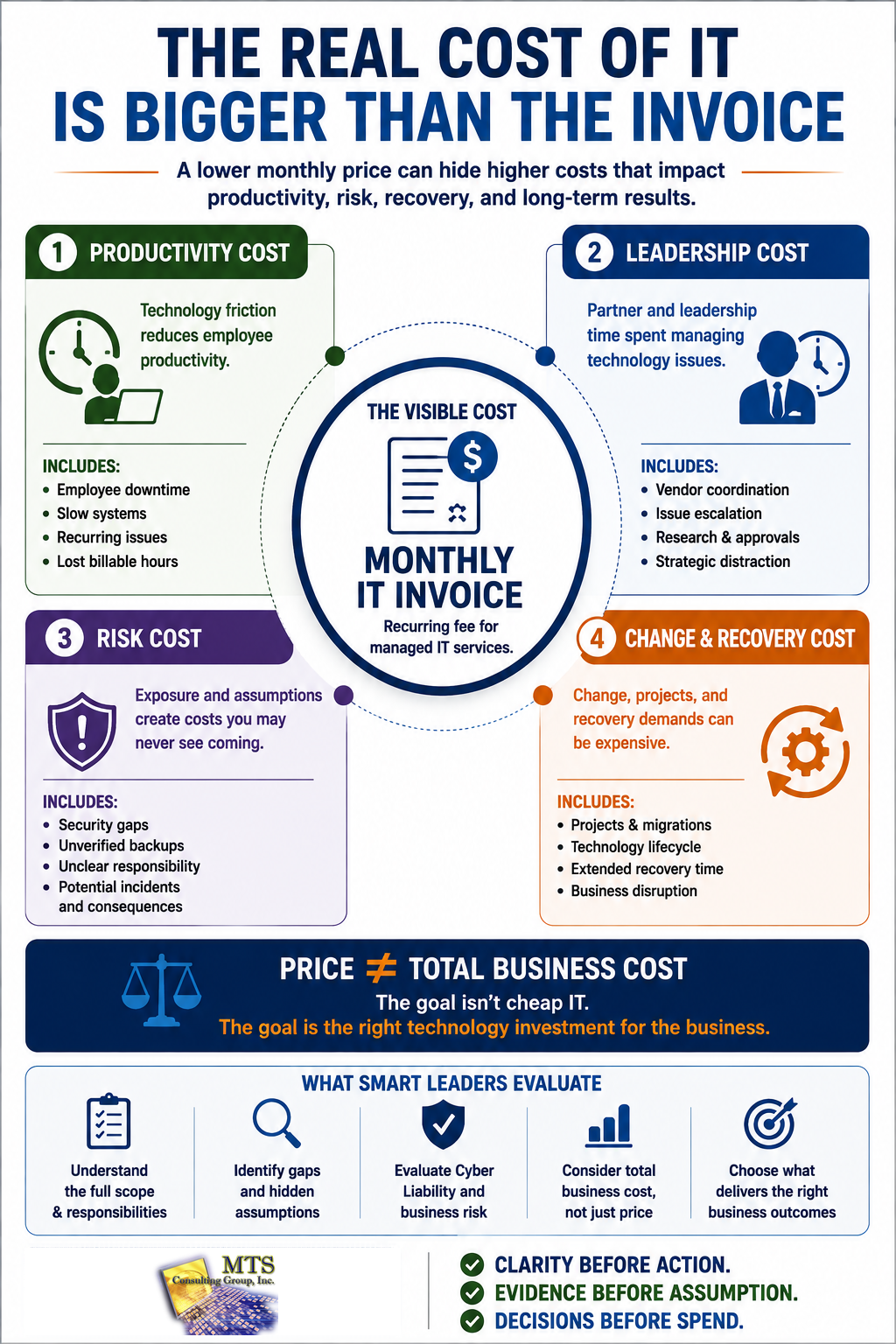
Why Can the Cheapest IT Provider Become the Most Expensive Business Decision?
The lowest-priced IT provider is not necessarily the least expensive choice.
For an accounting or tax firm, the real cost of technology includes more than the monthly invoice. It can also include employee downtime, partner time, unexpected project charges, deferred technology replacement, security gaps, slow recovery, unclear responsibilities, and business disruption.
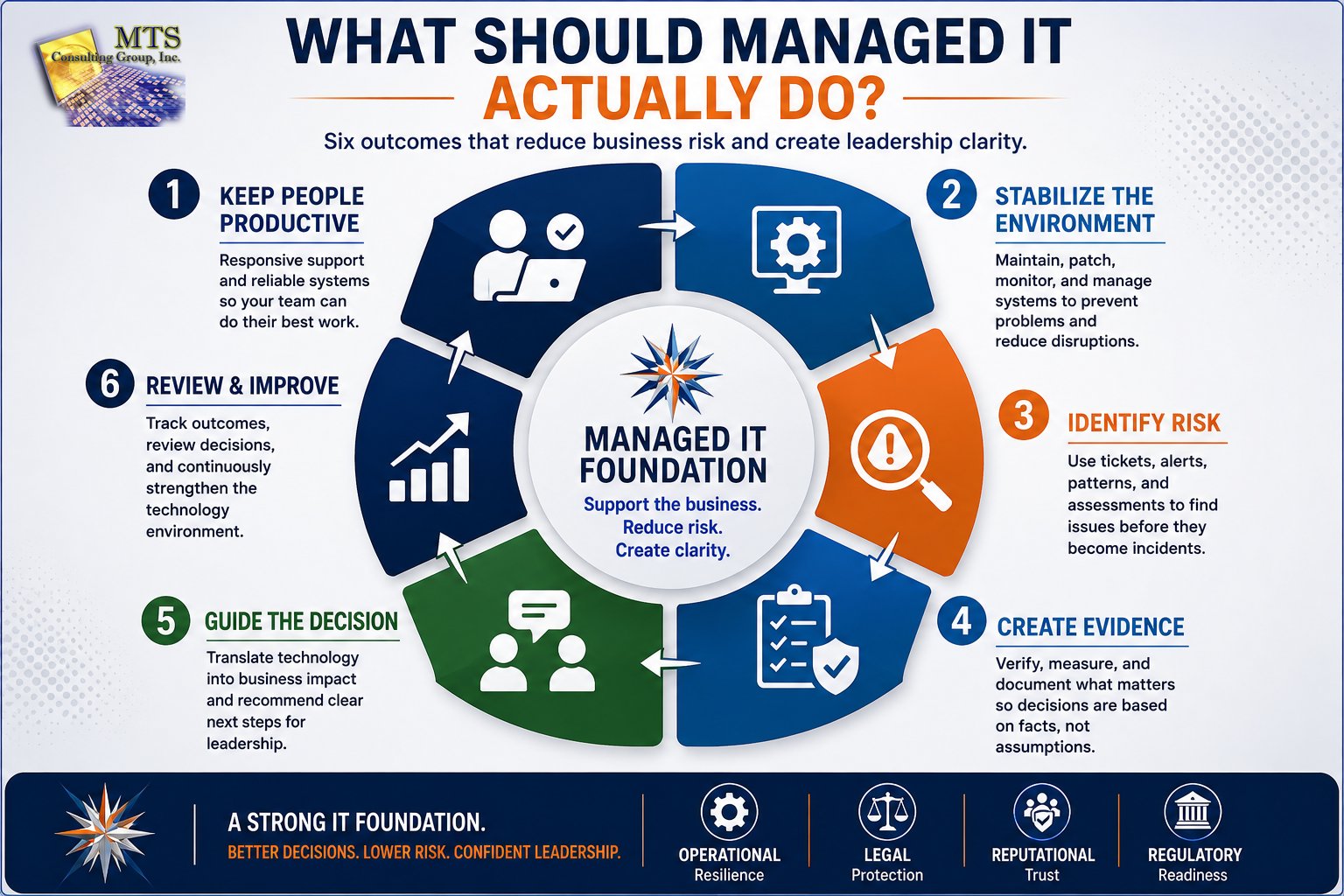
What Should Managed IT Actually Do to Reduce an Accounting Firm's Business Risk?
Managed IT should do more than keep computers running. For an accounting or tax firm, effective managed IT should create a reliable technology foundation that helps the organization keep employees productive, maintain and stabilize critical systems, identify recurring problems before they become larger disruptions, support appropriate cybersecurity protections, create useful documentation and evidence, and give leadership visibility into technology risks and decisions.
Managed IT is the foundation. It is not the full Cyber Liability program.
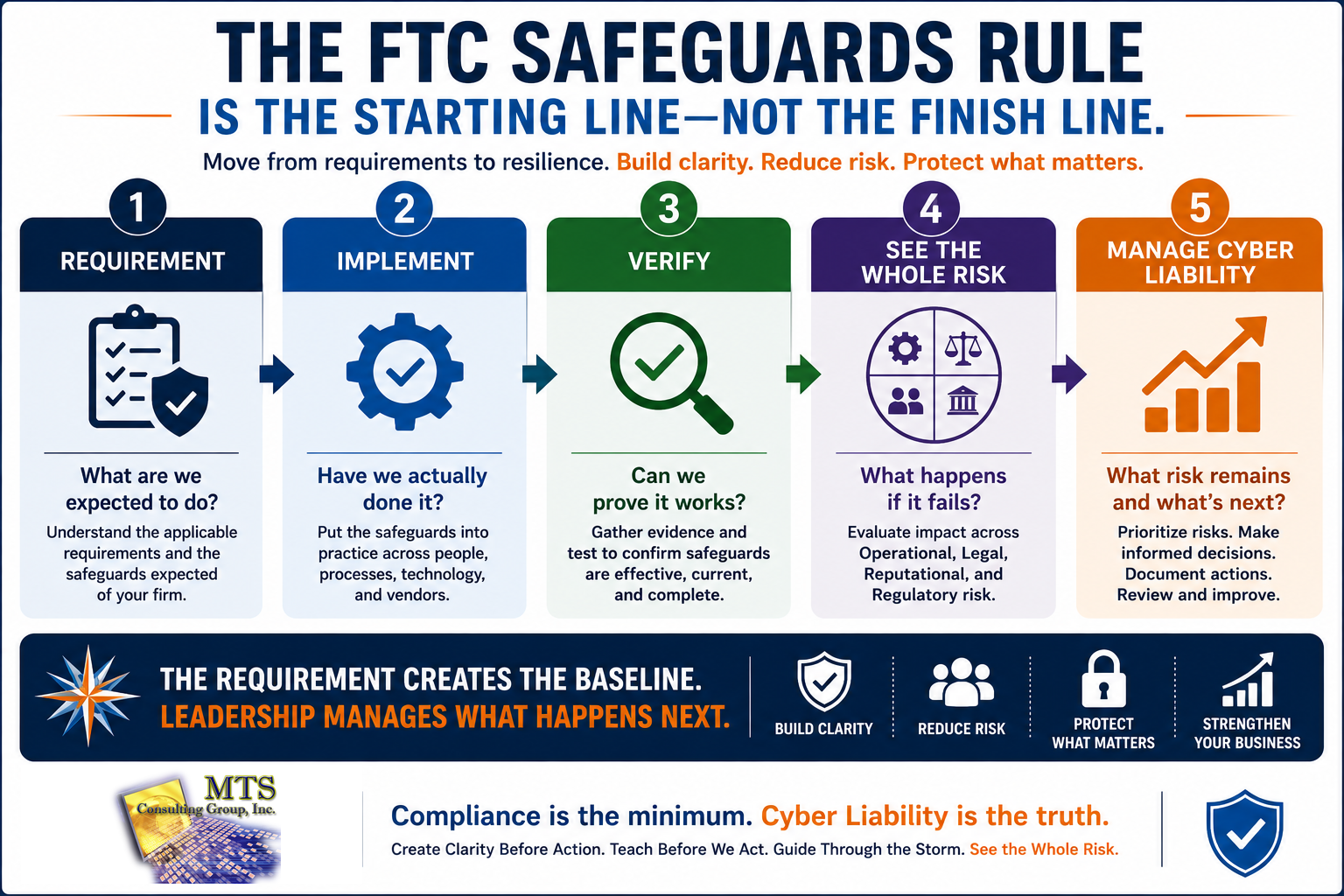
Why Is Meeting the FTC Safeguards Rule Only the Starting Point for an Accounting Firm?
Meeting the FTC Safeguards Rule is important for accounting and tax firms that are subject to it. But meeting a requirement is not the same thing as knowing your business is protected. A firm can have policies, security controls, written plans, training, and documentation in place while still carrying meaningful Operational, Legal, Reputational, and Regulatory Cyber Liability.
Compliance is the minimum. Cyber Liability is the truth.
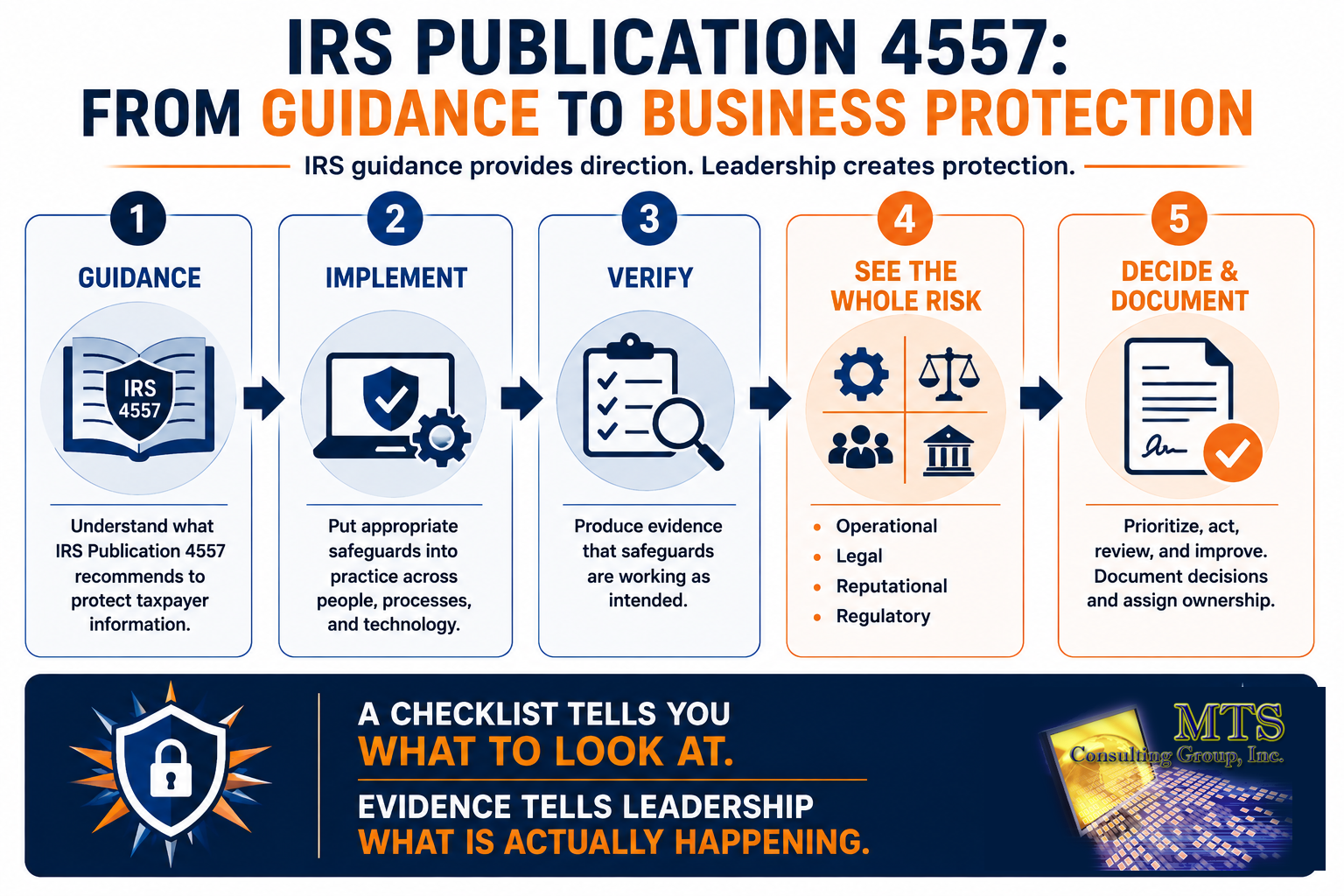
What Should Tax Professionals Understand About IRS Publication 4557 Beyond the Checklist?
IRS Publication 4557 gives tax professionals practical guidance for protecting taxpayer information, recognizing signs of data theft, responding to an incident, recovering from data loss, and understanding responsibilities connected to the FTC Safeguards Rule. But the document should not be treated as another checklist that gets completed and forgotten. Guidance becomes an operating system instead of a binder.
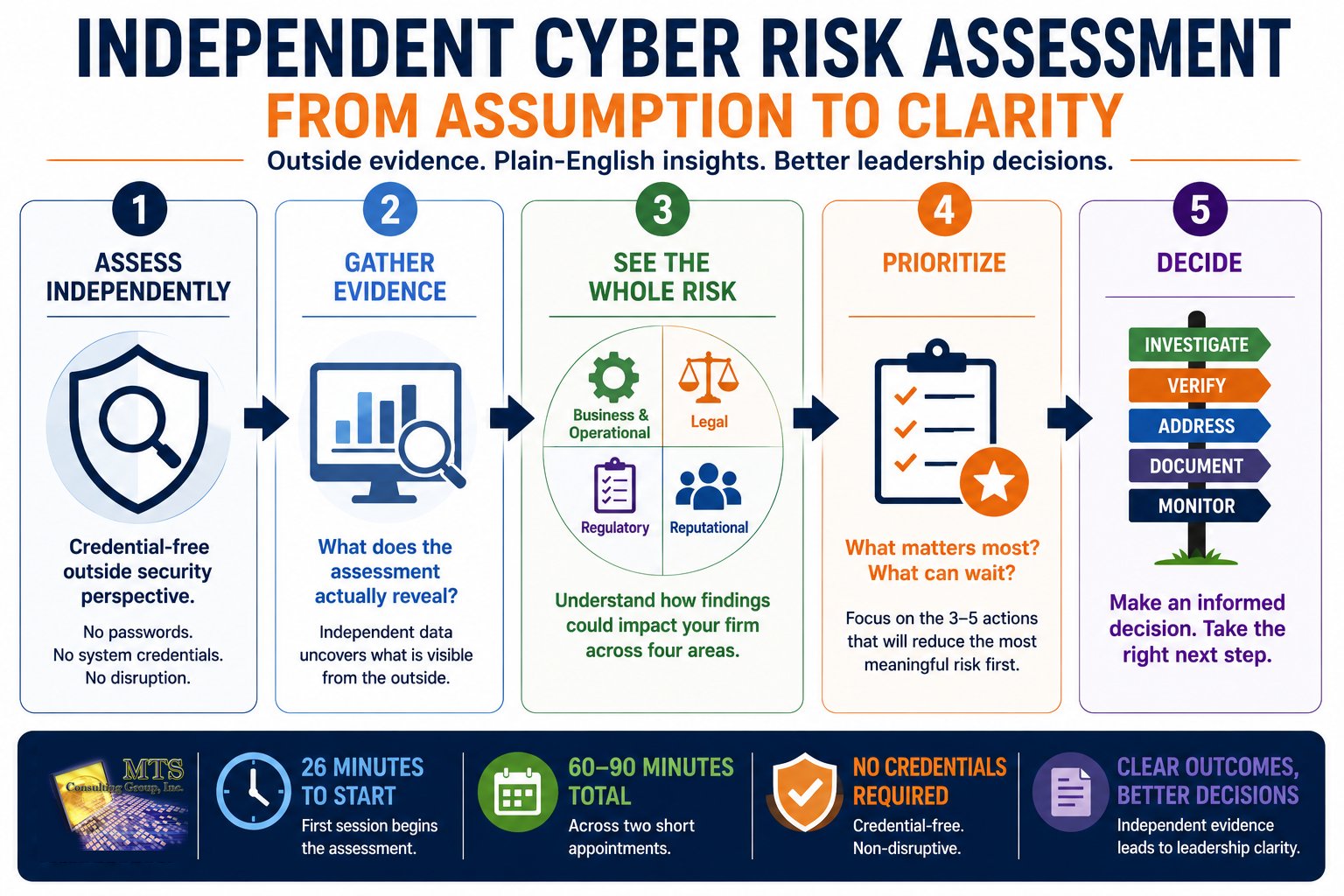
How Does an Independent Cyber Risk Assessment Help Accounting Firm Leaders Make Better Decisions?
An Independent Cyber Risk Assessment helps accounting and tax firm leaders replace assumptions about cybersecurity with independent evidence and a clearer understanding of where the business may actually be exposed.
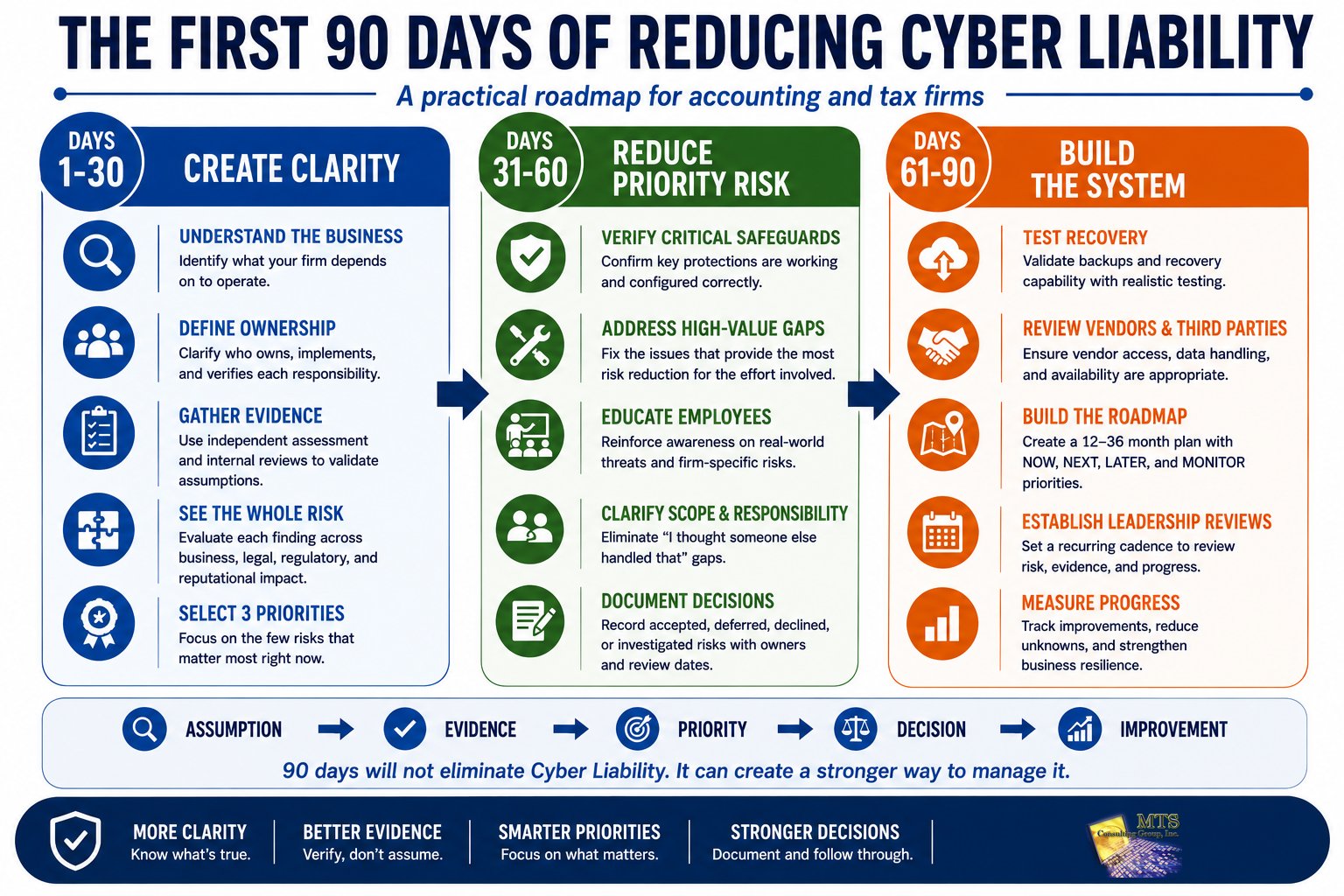
What Should the First 90 Days of Reducing Cyber Liability Look Like for an Accounting Firm?
An accounting or tax firm does not need to solve every cybersecurity problem in the first 90 days. A better approach is to divide the work into three 30-day phases: create clarity, reduce priority risk, and build the system.
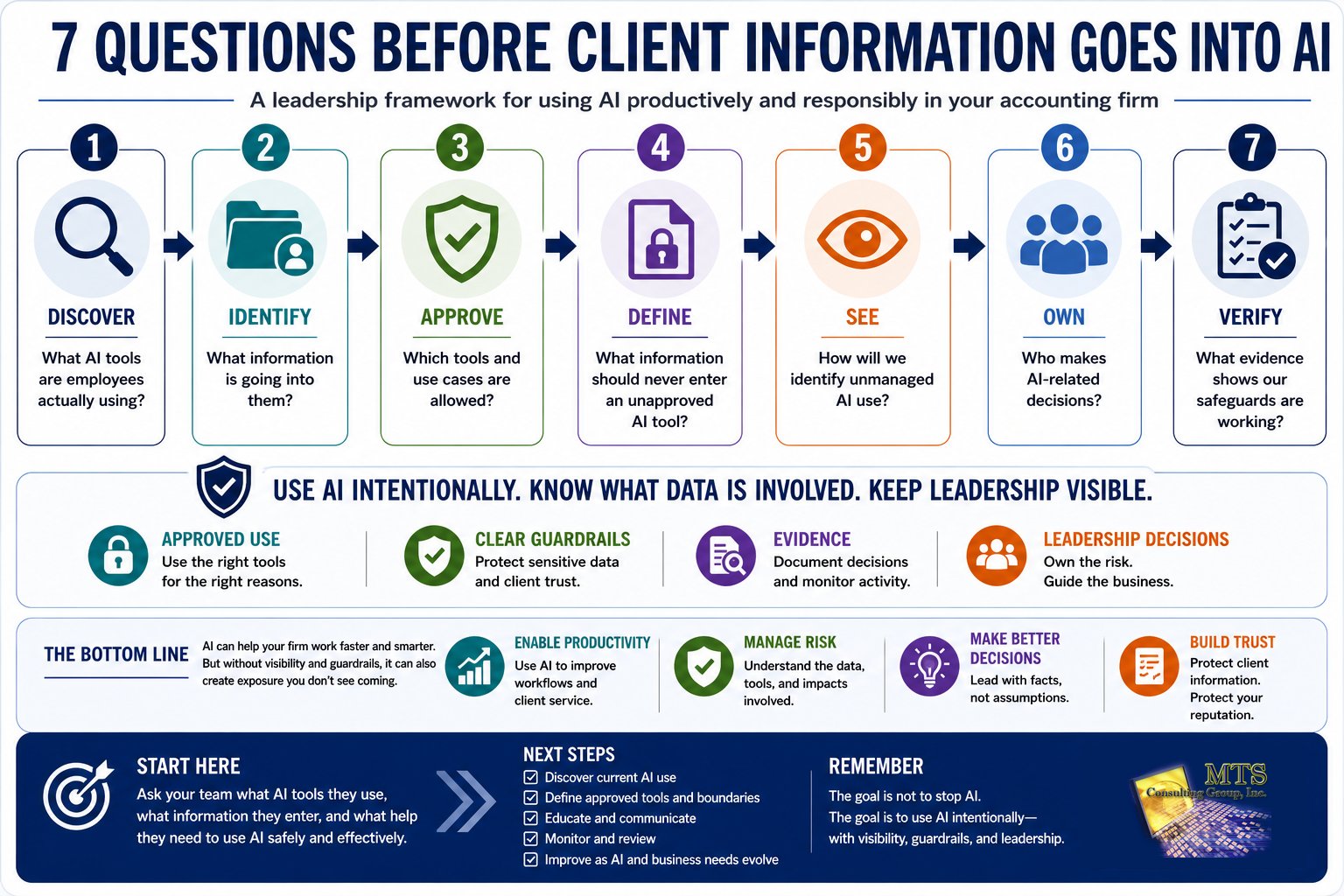
What Should Accounting Firm Leaders Ask Before Employees Put Client Information Into AI?
Before employees put client information into an AI tool, accounting and tax firm leaders should be able to answer seven questions about the AI tools employees use, the information being entered, approved tools and uses, information that should never enter an unapproved AI tool, how unmanaged AI use can be identified, who owns AI decisions, and what evidence shows the firm's safeguards are working.