
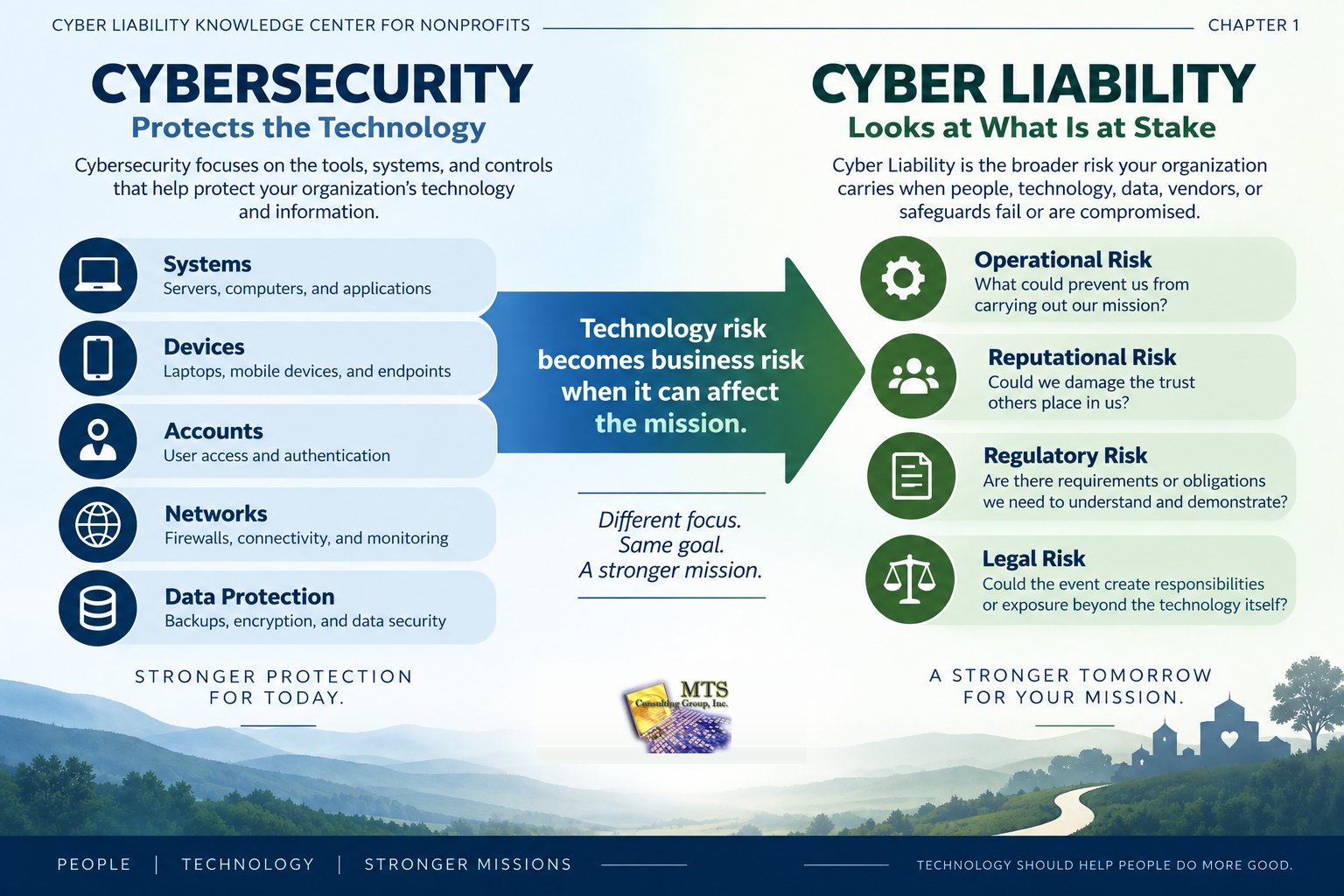
What Is Cyber Liability for a Nonprofit, and How Is It Different From Cybersecurity?
For a nonprofit organization, cybersecurity and Cyber Liability are connected, but they are not the same thing.
Cybersecurity is primarily concerned with protecting technology: systems, accounts, devices, networks, applications, and information.
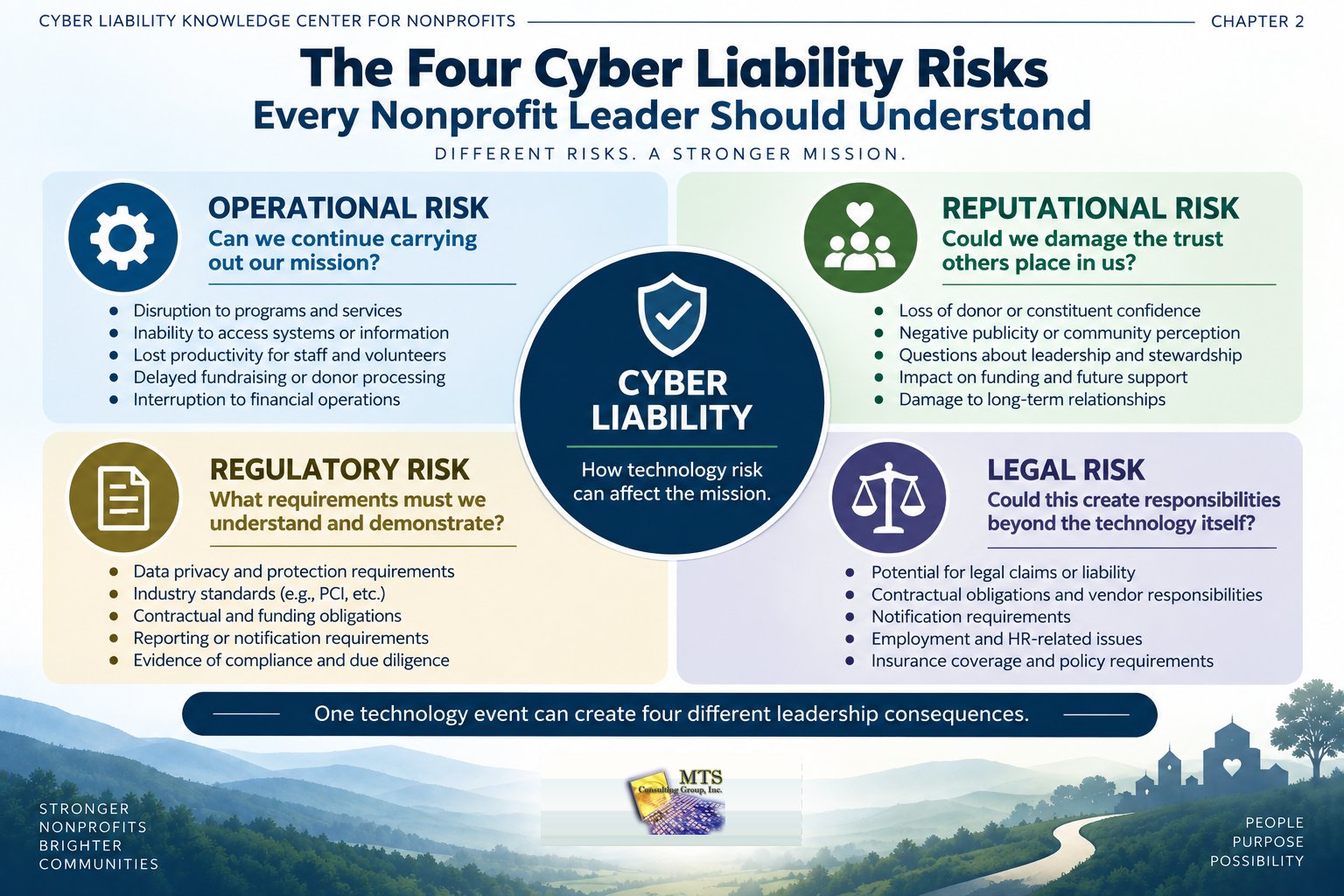
What Are the Four Cyber Liability Risks Every Nonprofit Leader Should Understand?
Cyber Liability is easier to understand when leaders stop treating cyber risk as one large technical problem and instead organize it into four areas: Operational, Reputational, Regulatory, and Legal risk.
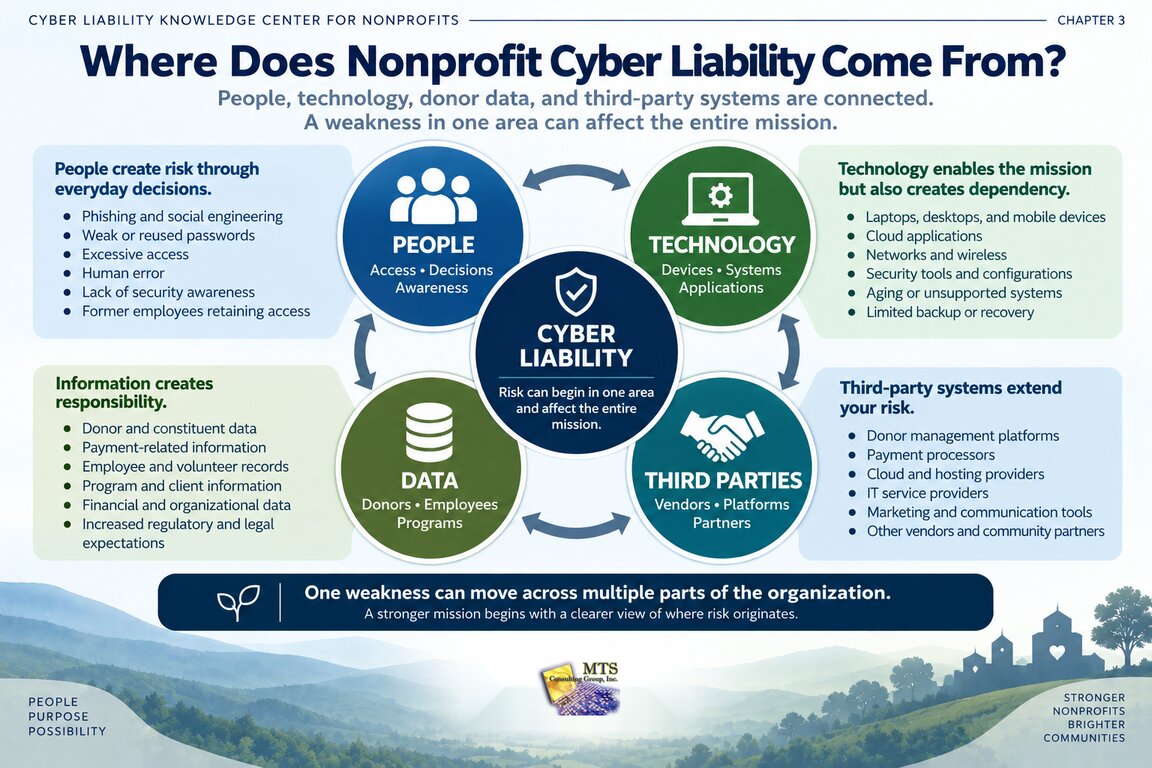
How Do People, Technology, Donor Data, and Third-Party Systems Create Cyber Liability for a Nonprofit?
Cyber Liability does not come from technology alone. For most nonprofits, risk is distributed across four connected areas: people, technology, sensitive and donor data, and third-party systems.
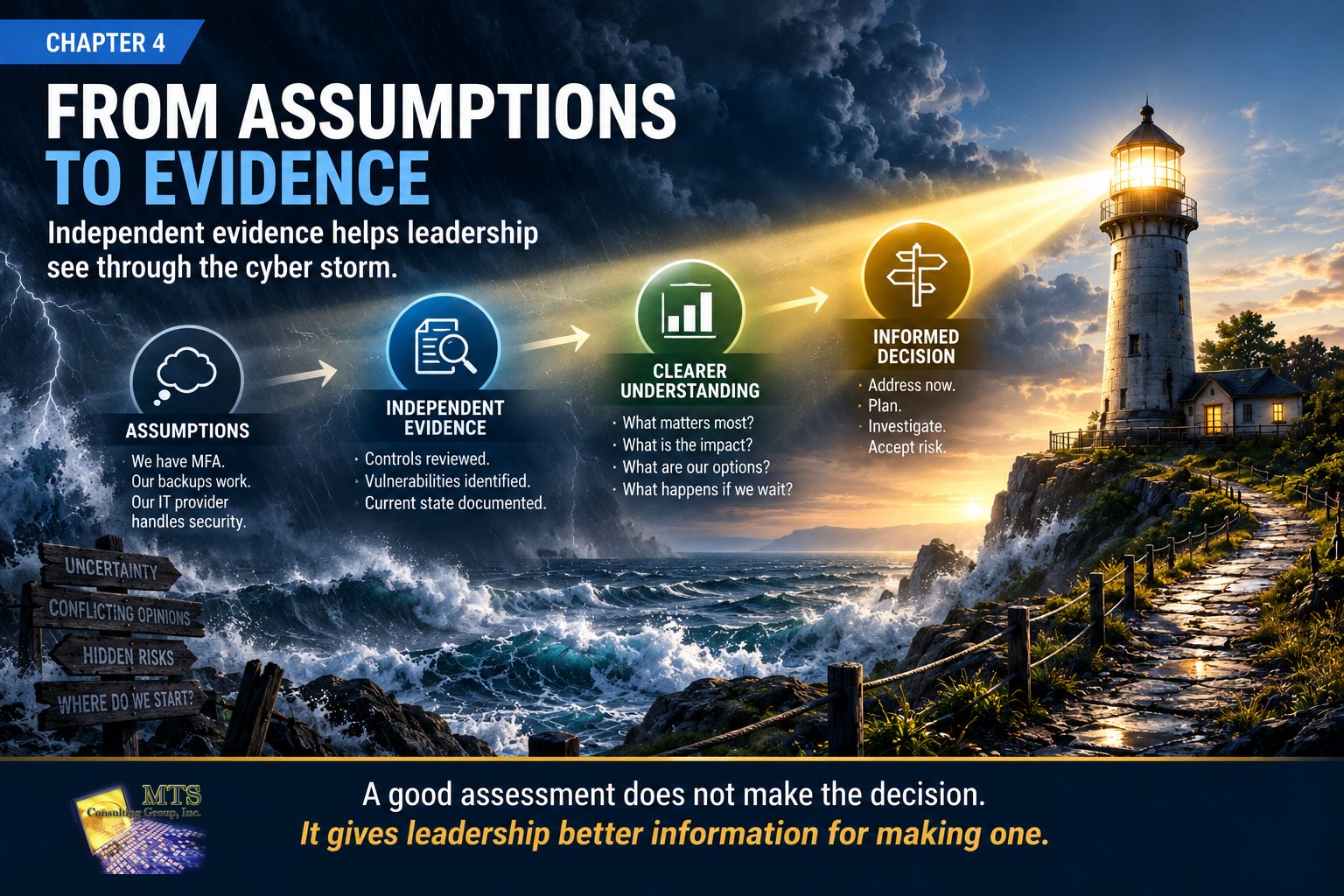
How Does an Independent Cyber Risk Assessment Help Nonprofit Leaders Make Better Decisions?
An Independent Cyber Risk Assessment gives nonprofit leaders something that is often difficult to get from day-to-day technology management: an objective view of the organization’s current cyber risk.
The value of independence is straightforward.
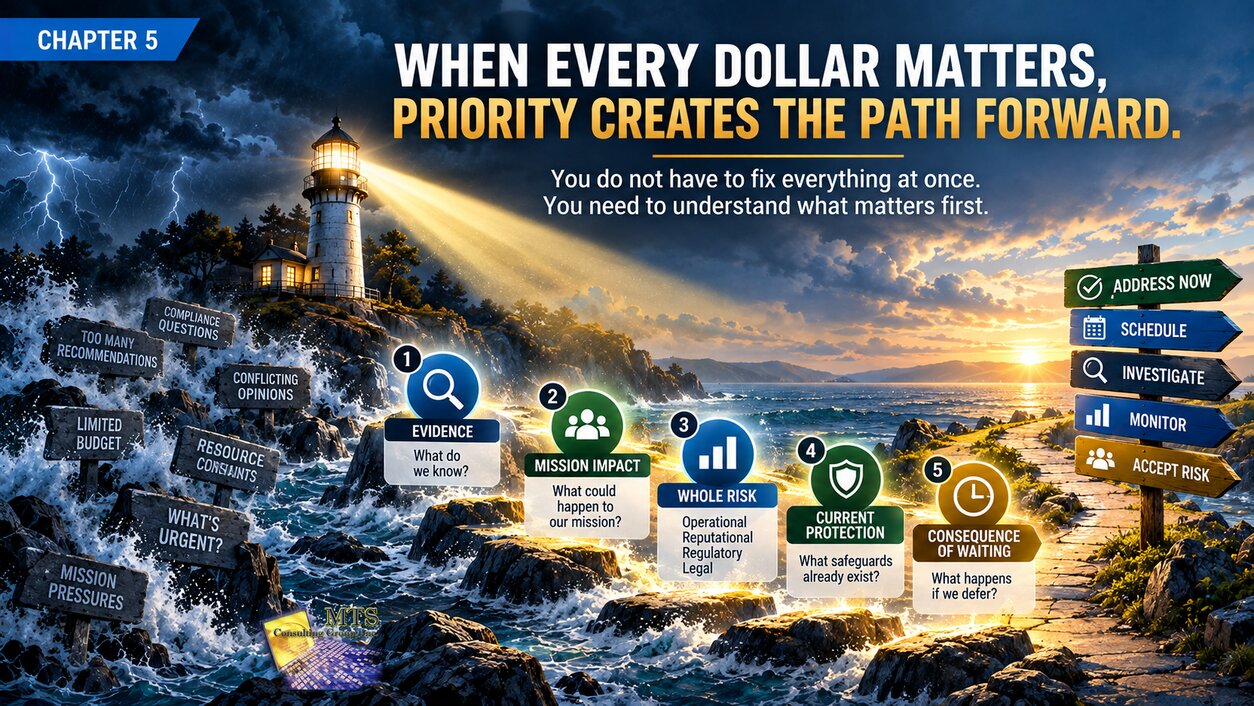
How Should a Nonprofit Prioritize Cyber Risks When Every Dollar Matters?
A nonprofit rarely has the budget, time, or staff to address every cybersecurity recommendation at once.
That does not mean leadership has to choose between protecting the organization and funding the mission.
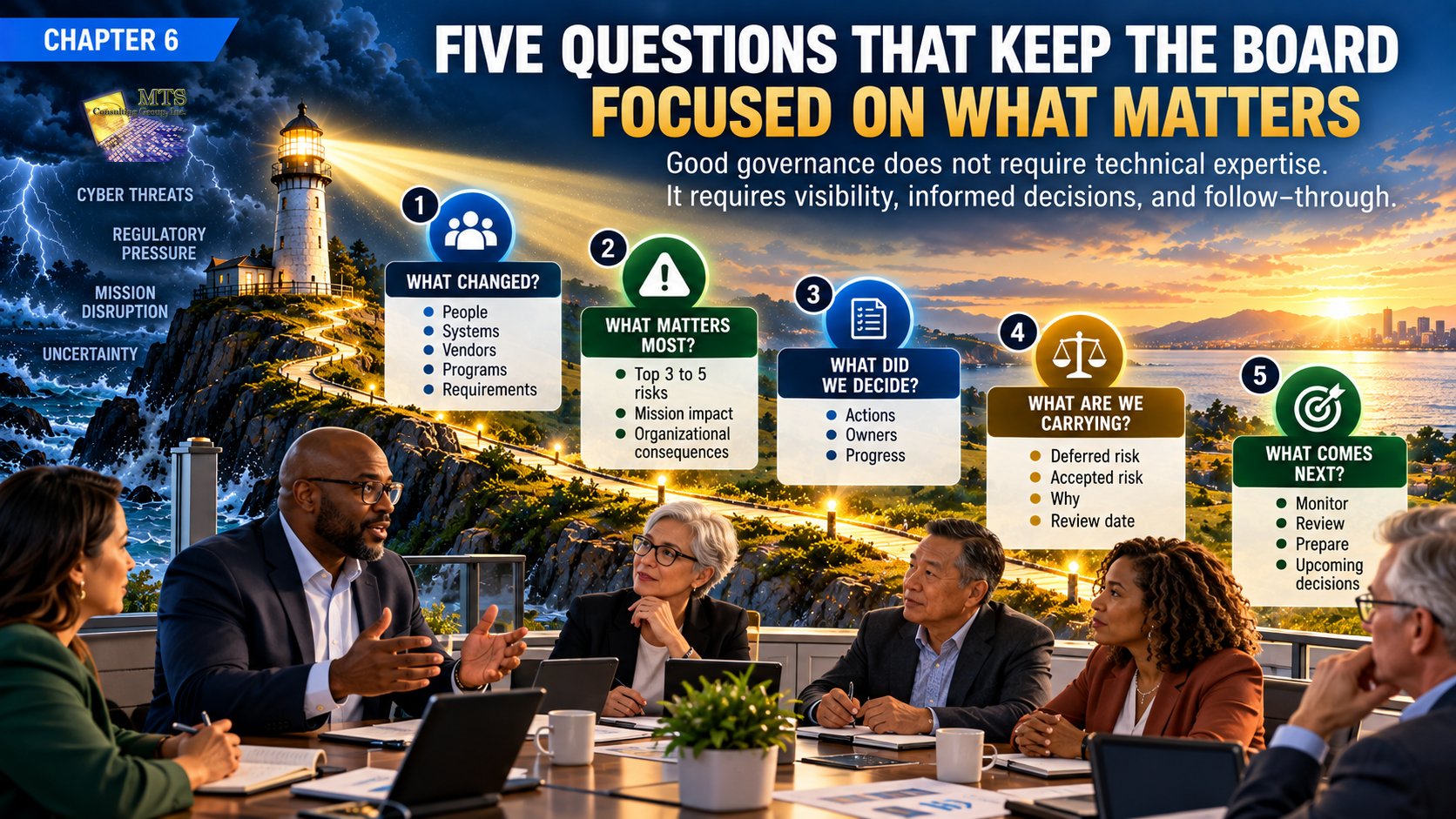
What Should a Nonprofit Board Ask About Cyber Liability Each Quarter?
A nonprofit board does not need to become a cybersecurity team.
It does need enough visibility to understand whether technology and cyber risk could affect the mission, the organization’s responsibilities, or the trust others place in it.
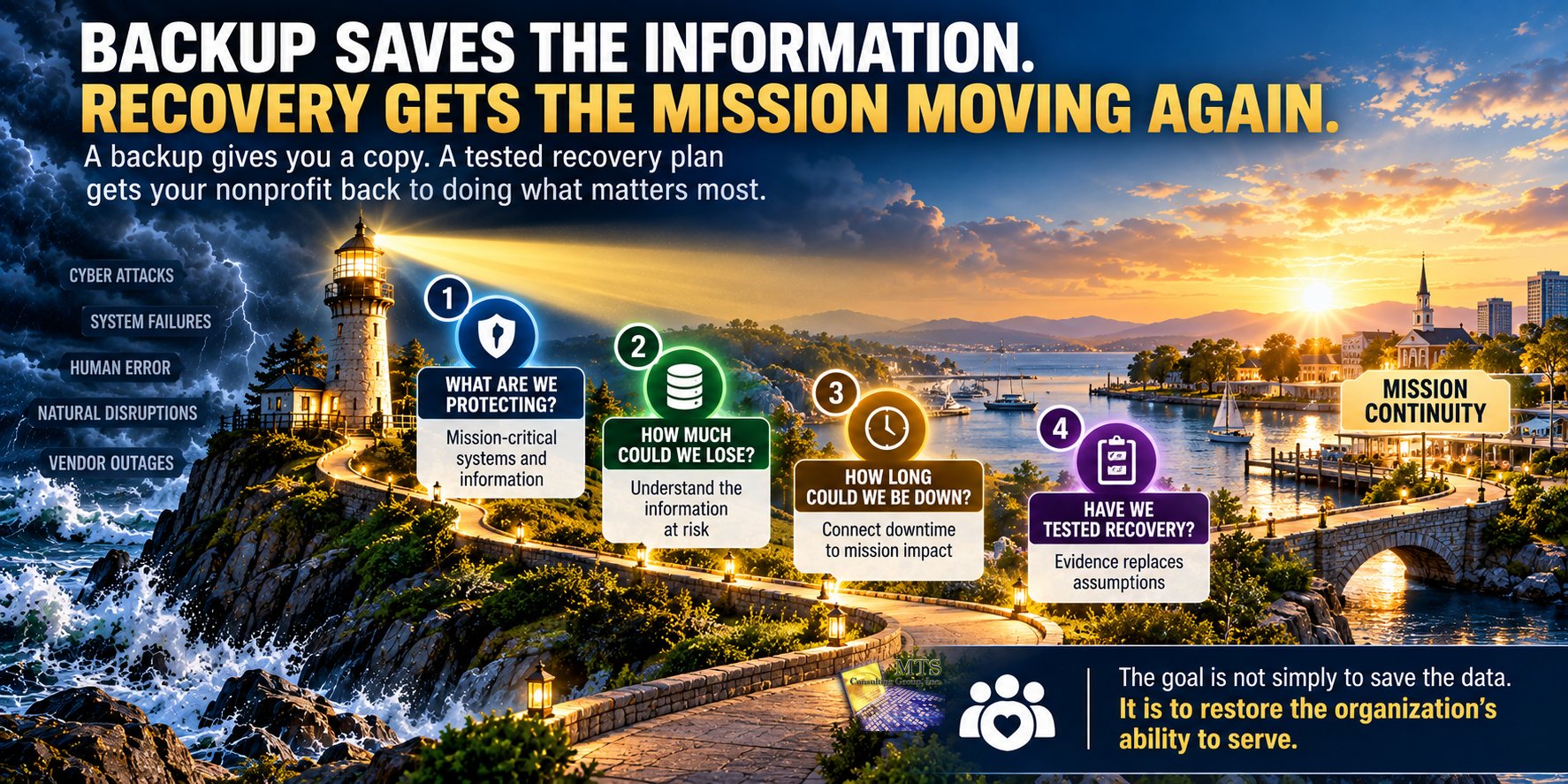
What Do Backup and Recovery Have to Do With a Nonprofit’s Mission Continuity?
Having a backup does not necessarily mean your nonprofit can recover.
A backup is a copy of information.
Recovery is the organization’s ability to use those copies, restore critical systems, and resume the work the mission depends on.
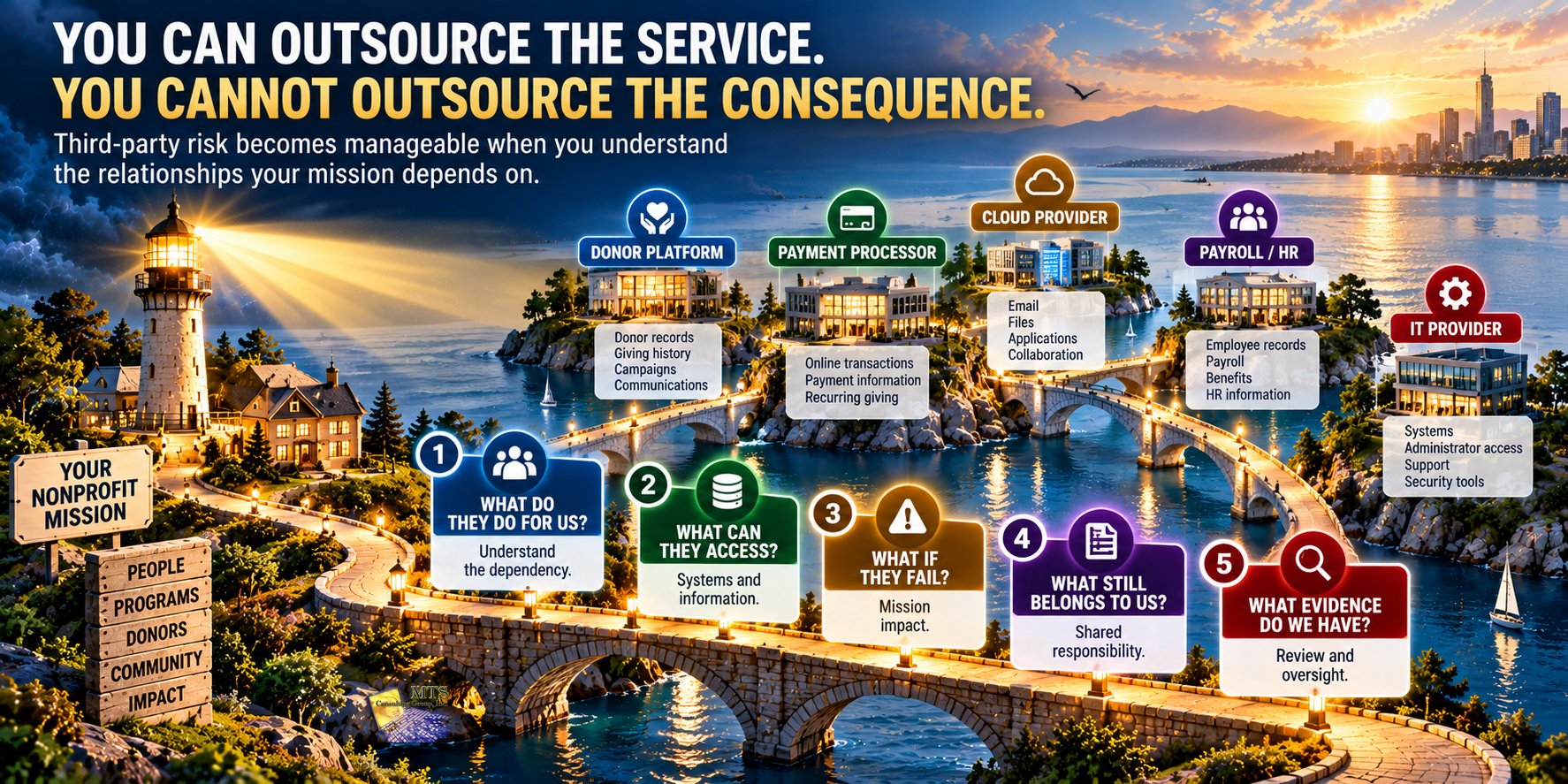
How Should Nonprofits Manage Cyber Risk From Vendors and Third-Party Systems?
Most nonprofits depend on outside organizations to help them operate.
A nonprofit can outsource the technology, but it cannot automatically outsource the consequences if that technology fails, is compromised, or exposes sensitive information.
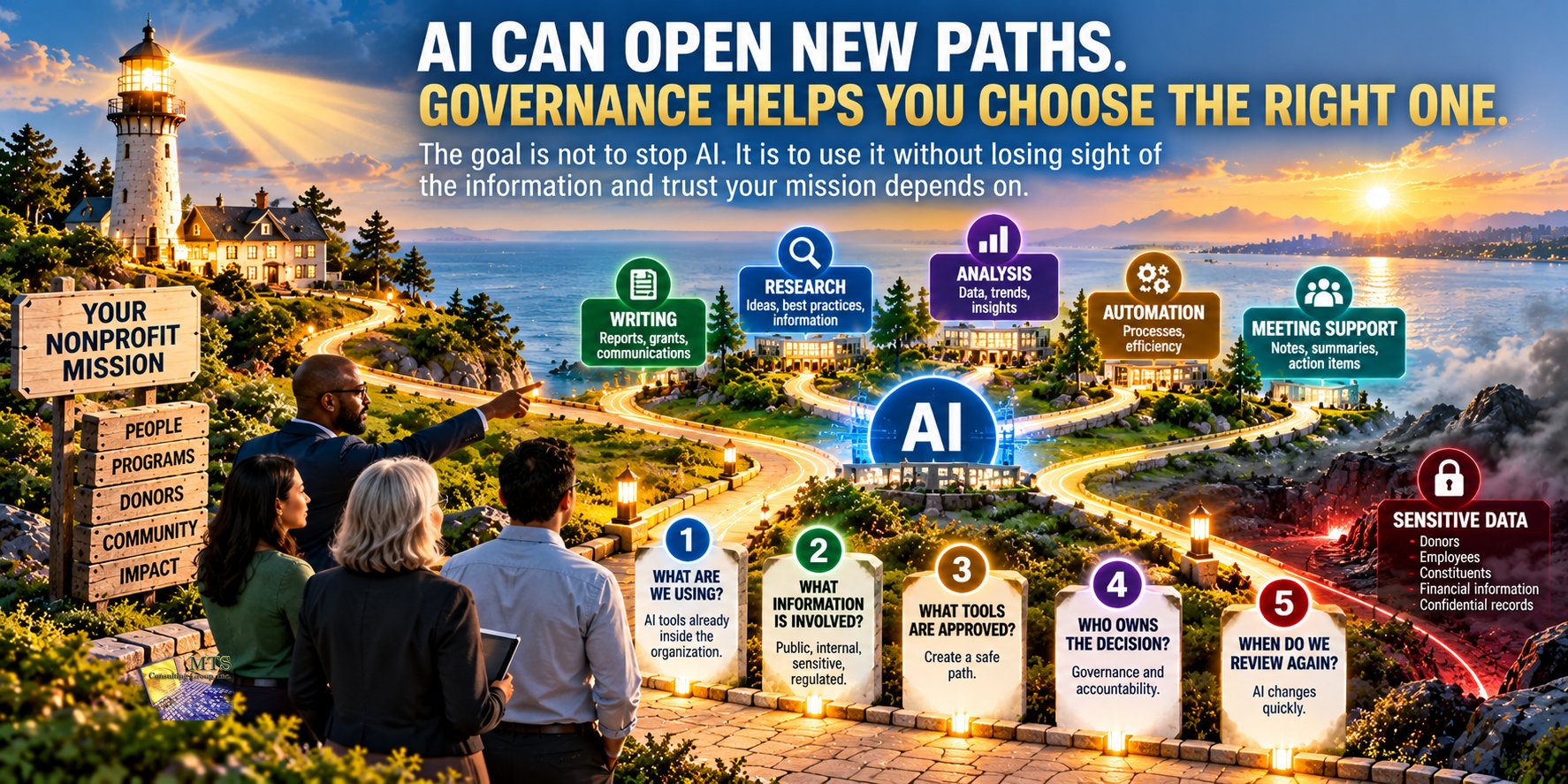
What Should Nonprofits Know About AI, Sensitive Data, and Cyber Liability?
Artificial intelligence can help nonprofit organizations write, research, summarize, analyze, organize, and communicate more efficiently.
The bigger leadership question is not whether employees will use AI. It is whether the organization understands what information employees are putting into AI tools, which tools they are using, and what rules should guide that use.
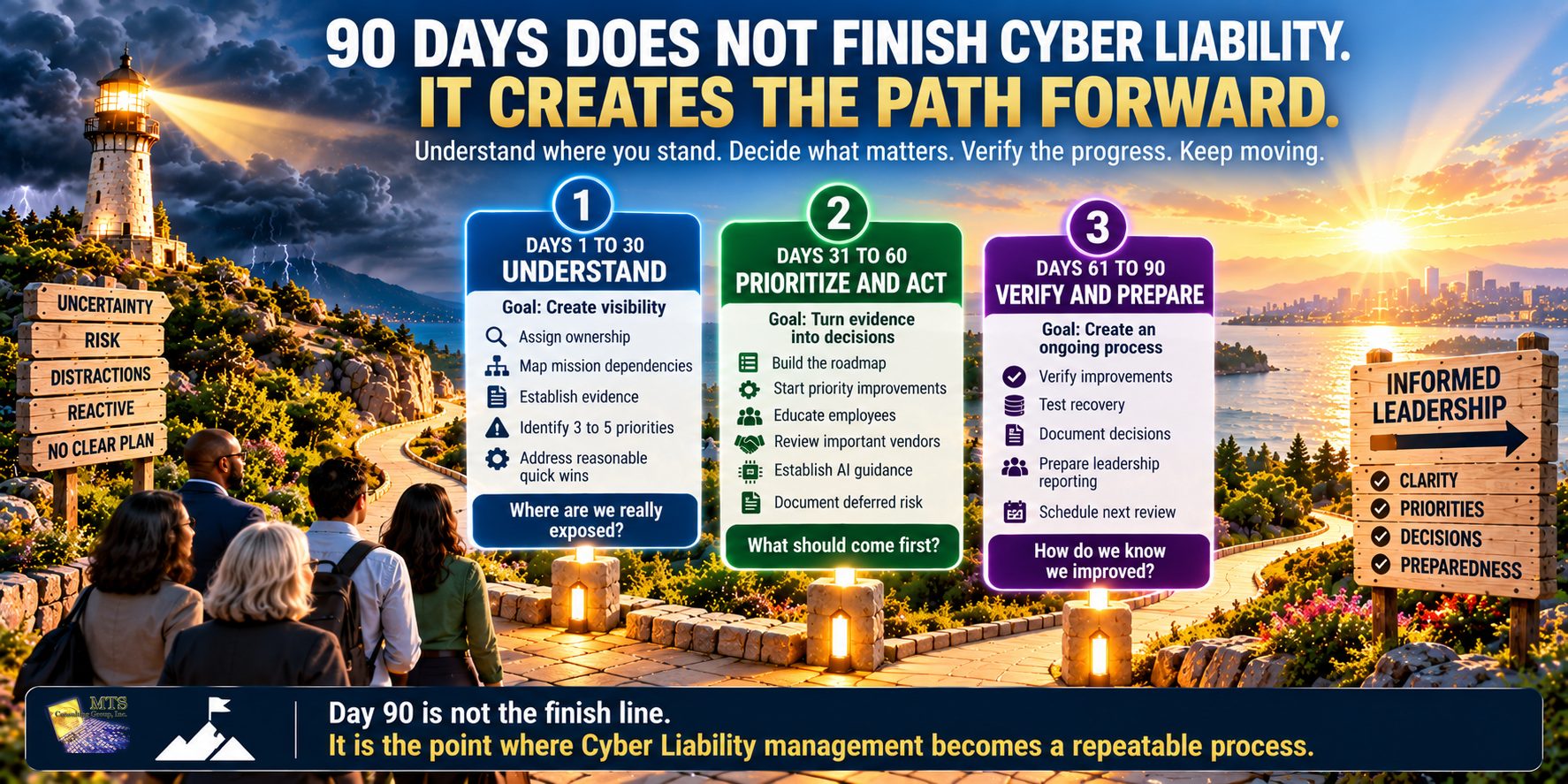
What Should the First 90 Days of Reducing Cyber Liability Look Like for a Nonprofit?
A nonprofit does not need to fix every cybersecurity risk in the first 90 days.
It needs to know where it stands, decide what matters most, address reasonable priorities, and create a process for managing the risks that remain.

How Much Should a Nonprofit Budget for Managed IT, Cybersecurity, and Cyber Liability Management?
A nonprofit trying to budget for managed IT, cybersecurity, and Cyber Liability management can use $100 to $400 per user per month as a practical planning range for the service model discussed in this Knowledge Center.
That means a 50-person organization might initially model a monthly investment of approximately $5,000 to $20,000 before considering hardware purchases, major projects, unusual licensing requirements, or other one-time expenses.
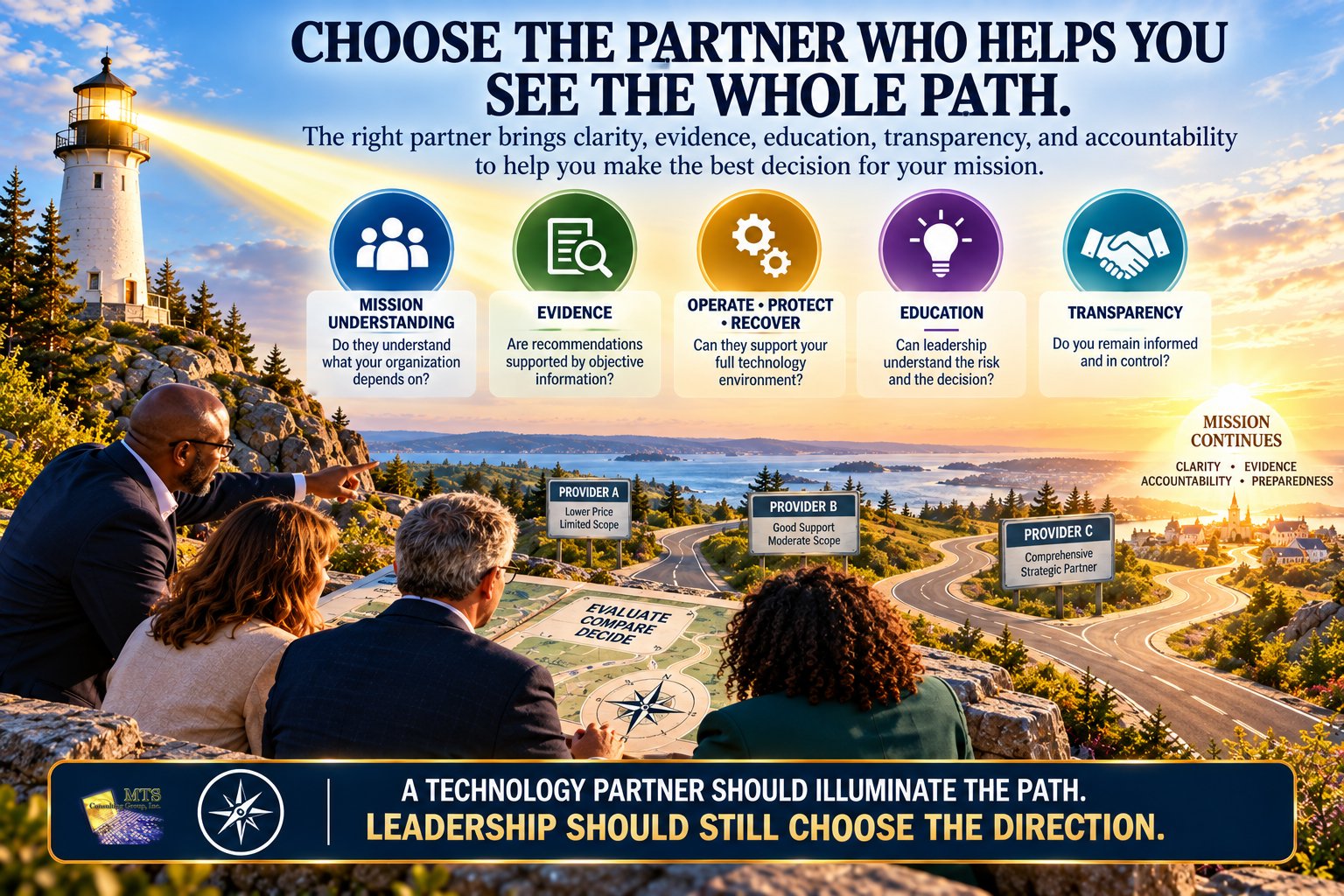
How Should a Nonprofit Evaluate an IT and Cybersecurity Partner?
A nonprofit evaluating an IT and cybersecurity partner should look beyond help desk response times and monthly price.
A strong partner should help leadership understand the environment, the risks, the options, and the consequences of those options.