Halloween brings plenty of pretend monsters.
Vampires. Mummies. Ghosts. Shapeshifters.
But for nonprofit leaders, some of the harder threats to recognize today do not look frightening at all.
They may look like an email from a board member.
They may sound like a voicemail from your Executive Director.
They may appear to be a perfectly written message from a trusted vendor.
They may even look like a helpful AI tool an employee found online.
That is what makes artificial intelligence such an important cybersecurity conversation for nonprofits.
AI can help your organization save time, improve communication, organize information, and serve your mission more effectively. But the same technology can also help cybercriminals create scams that are faster, more believable, and harder for your staff and volunteers to recognize.
For nonprofit leaders, the issue is bigger than technology.
It is about cyber liability.
At MTS, cyber liability means the business, legal, regulatory, and operational exposure your organization carries when cybersecurity responsibilities are not properly understood or managed.
That exposure can affect donor trust, board confidence, fundraising, operations, sensitive data, and ultimately the people who depend on your mission.
The good news is that you do not need to become an AI expert to prepare.
You need clear procedures, good safeguards, educated people, and a plan you understand.
Think of it as preparing for a storm.
You cannot control the weather. But when you know where the risks are and what to do when conditions change, you do not have to operate in fear.
AI Shapeshifters: Sounding Right Is No Longer Enough
There was a time when hearing someone's voice or seeing them on video offered a certain amount of reassurance.
AI is changing that.
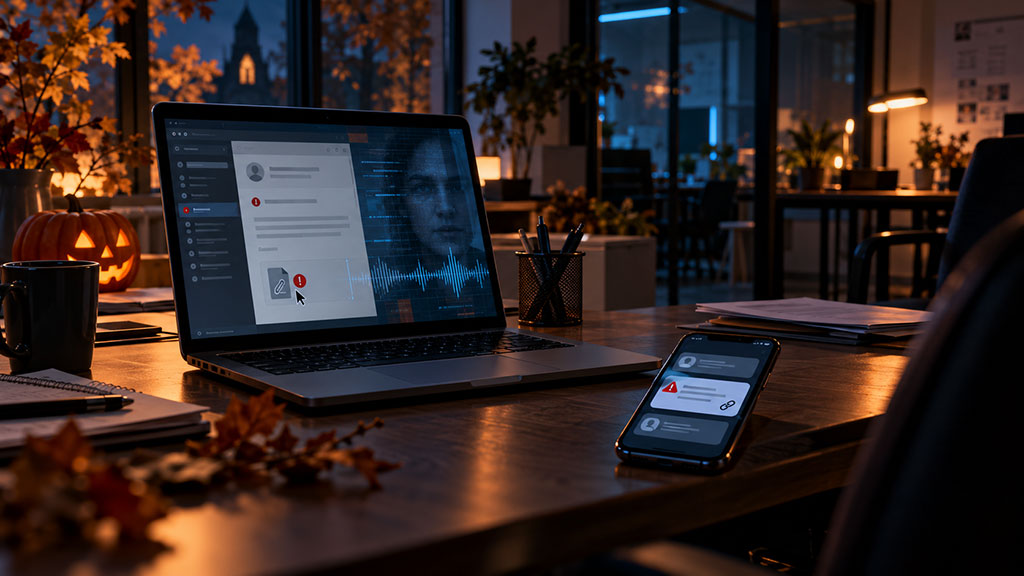
Cybercriminals can now use artificial intelligence to create convincing voice recordings, images, videos, and messages that imitate real people. That could mean a fake phone call that sounds like an executive, a video that appears to show someone you know, or a message designed to imitate a trusted colleague.
For a nonprofit, imagine a finance employee receiving what appears to be an urgent request from an Executive Director to change payment information.
Or a staff member receives a voice message that seems to come from a board officer asking for sensitive donor information.
The message may look right.
The voice may sound right.
But sounding right is no longer enough.
This is why your organization should not depend entirely on one employee being able to recognize a fake.
Instead, build procedures that give people a safe way to verify important requests.
Money transfers, banking changes, password resets, access changes, donor-data requests, and other sensitive actions should have clear verification steps.
Multi-factor authentication can also add another layer of protection by requiring more than a password before someone gains access to an account.
Here is what that really means:
Your people should not have to outsmart AI. Your process should help protect them when AI becomes convincing.
That reduces more than cybersecurity risk. It can also reduce the business and operational cyber liability created when one believable request leads to fraud, lost data, or interrupted services.
AI Mummies: Old Phishing Scams Wrapped in Better Packaging
Many nonprofit employees learned to recognize phishing by looking for familiar warning signs.
Misspelled words.
Poor grammar.
Strange greetings.
Odd formatting.
Urgent demands.
Those clues can still matter.
But AI has made it much easier for criminals to create polished messages that look professional and believable.
A phishing email can now use perfect grammar.
It can reference the right organization.
It can imitate professional language.
It may even include details collected from websites, social media, staff biographies, or public nonprofit records.
The scam is old.
The wrapping is new.
That means your team needs to look beyond how professional a message appears and focus on what the message is asking them to do.
Does someone want money sent somewhere new?
Are they requesting a password or login code?
Are they asking for donor, employee, client, or financial information?
Are they pushing someone to skip a normal approval process?
Are they asking you to open a file or visit a website you were not expecting?
These are stronger warning signs than a spelling mistake.
For nonprofit leaders, this is also an important stewardship issue.
Your donors, board members, staff, volunteers, funders, and community partners place trust in your organization. Protecting that trust means building habits that work even when a fraudulent message looks completely legitimate.
Cybersecurity awareness should therefore move beyond teaching people to “spot bad emails.”
Teach people how to verify important requests.
That is a much stronger defense.
AI Vampires: Be Careful What You Invite Inside
There is an old rule in vampire stories: the vampire cannot enter unless someone invites it inside.
AI tools can create a similar problem.
Employees and volunteers are using AI tools in more workplaces every day. Many of those tools can be useful.
The risk appears when someone begins sharing sensitive organizational information without understanding where that information is going.
This is often called Shadow AI—the use of artificial intelligence tools that have not been reviewed or approved by the organization.
Imagine a staff member trying to save time.
They copy a donor spreadsheet into an AI tool and ask it to organize the information.
Someone pastes a grant application containing sensitive financial details into an AI assistant and asks for editing help.
A program manager uploads confidential client information and asks AI to summarize it.
Nobody intended to create a security problem.
They were simply trying to get work done.
But now the organization has to answer important questions:
Where did that information go?
Was it stored?
Could it be used to train the AI system?
Who can access it?
Was sensitive donor, employee, financial, or client information exposed?
Would leadership even know the data had been shared?
Those questions are part of your organization's cyber liability.
The answer is not to panic and ban every AI tool.
The better approach is to create clarity.
Your organization should establish simple rules about which AI tools may be used, what kinds of information may be entered into them, and what information should never leave approved systems.
Staff should understand those rules before they are expected to follow them.
You do not need a 70-page AI policy that nobody reads.
You need guidelines people can understand and use.
The Best Defense Against AI Monsters? Better Rules—and a Clearer Plan
AI is making deception easier to create and harder to recognize.
But that does not mean your nonprofit is powerless.
The strongest response is not asking every employee to become a cybersecurity detective.
It is creating an environment where good decisions are easier to make.
That includes clear verification procedures.
Multi-factor authentication.
Defined rules for AI use.
Regular staff education.
Strong access controls.
Reliable backup and recovery planning.
Clear incident-response responsibilities.
And leadership visibility into where cyber risk actually exists.
These safeguards help protect more than computers.
They help protect your ability to serve.
They help protect donor confidence.
They help give your board better answers.
They help reduce the possibility that one mistake becomes a larger business, legal, regulatory, or operational problem.
For nonprofit leaders in Metro Detroit and beyond, that is the real goal of cybersecurity.
Not fear.
Not a collection of technical tools you do not understand.
Preparation.
AI Cybersecurity Is Really a Leadership and Stewardship Issue
One of the most important things nonprofit leaders can understand about AI cybersecurity is this:
You do not have to know everything about artificial intelligence.
You do need to understand the risks your organization is responsible for.
That starts by asking a few practical questions.
Do we know which AI tools our employees and volunteers are using?
Do we have rules about what information can be entered into those tools?
Do we verify financial and account-change requests using a second method?
Is multi-factor authentication protecting important accounts?
Could we show our board what protections are in place today?
Do we know where our largest cyber liability exposures are?
Those questions help move cybersecurity out of the server room and into the leadership conversation where it belongs.
Because when something goes wrong, the impact is rarely limited to technology.
It may affect operations.
It may affect fundraising.
It may affect legal or regulatory responsibilities.
And it may affect the trust your organization has spent years building.
You should not have to become a cybersecurity expert to make responsible decisions about those risks.
You need clarity about where you stand, an informed plan for what comes next, and a trusted partner who can help you stay prepared as technology changes.
You Don't Have to Navigate the AI Storm Alone
AI will continue to change.
The scams will change with it.
The answer is not trying to predict every new trick cybercriminals will create.
The answer is building an organization that knows how to respond when something does not look right.
That is what preparation gives you.
At MTS Consulting Group, our role is to be a Beacon in the Cyber Storm—helping nonprofit leaders understand the risks in front of them, make informed decisions, and protect the mission, people, and communities depending on them before a crisis hits.
If you are wondering how your staff is using AI, whether sensitive information may be exposed, or whether your current safeguards are enough, a conversation can help bring some clarity.
Schedule a Discovery Call with MTS.
We will talk about how AI is being used inside your organization, how sensitive requests are verified, where cyber liability may exist, and what questions leadership should be asking next.
No scare tactics.
No technical lecture.
Just a clearer picture of where you stand and what deserves your attention.
Because the best time to understand the storm is before you are standing in the middle of it.