Why Every Nonprofit Needs a Cyber Incident Response and Business Continuity Plan
Posted July 2, 2026
Is Your Nonprofit Ready for a Cyber Emergency?
No nonprofit leader expects to face a ransomware attack, system outage, or major technology failure.
But every nonprofit depends on technology to serve its mission.
Your donor database, Microsoft 365 environment, financial systems, online giving platform, volunteer records, and board documents all rely on technology working exactly as expected.
When something unexpected happens, there isn't time to create a plan.
That's why preparation matters.
At MTS Consulting Group, we help nonprofit organizations throughout Metro Detroit reduce cyber liability exposure by preparing for technology disruptions before they become operational crises.
As your Beacon in the Cyber Storm, we believe confidence comes from preparation—not panic.
Why Planning Before an Emergency Matters
Imagine you're flying through unexpected turbulence.
You wouldn't want to hear the pilot say,
"Give me a minute. I've never handled this before."
Flying feels safe because pilots train for emergencies long before they ever happen.
Hospitals, firefighters, emergency responders, and other high-risk professions follow the same principle.
Preparation happens before the emergency.
Execution happens during it.
The same is true for nonprofit organizations.
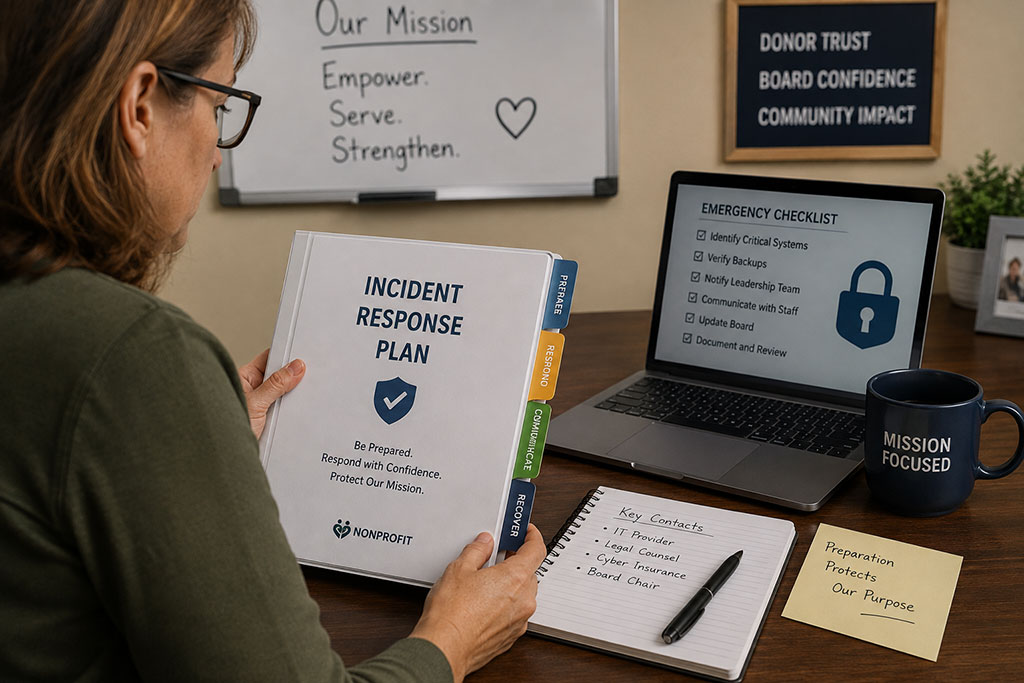
A documented cyber incident response plan helps your leadership team respond quickly, communicate clearly, and continue serving your community even when technology fails.
The Technology Emergencies Most Nonprofits Never Practice For
Technology disruptions rarely arrive with advance warning.
They often happen during ordinary workdays when your staff is focused on serving your mission.
Examples include:
- Ransomware attacks
- Phishing emails
- Microsoft 365 account compromise
- Internet outages
- Server failures
- Cloud application interruptions
- Accidental file deletion
- Hardware failure
Most nonprofit organizations invest in cybersecurity tools, backups, antivirus software, and cloud services.
Those investments are important.
But technology alone doesn't create readiness.
The real question is:
Does your organization know exactly what to do when something goes wrong?
Questions Every Nonprofit Should Be Able to Answer
During a cyber incident, uncertainty creates delays.
Ask yourself:
- Who leads the recovery effort?
- Which systems are restored first?
- How will staff continue serving clients?
- Who communicates with donors and funders?
- How will the board receive updates?
- How quickly can operations return to normal?
If those answers haven't been documented before the emergency, your organization will likely be creating the plan during the crisis.
That increases stress, delays recovery, and expands your organization's business, legal, regulatory, and operational cyber liability exposure.
The Hidden Cost of Learning During the Crisis
Every delay creates another challenge.
- Leadership pauses to evaluate options.
- Staff wait for direction.
- Departments lose productivity.
- Programs slow down.
- Fundraising campaigns are interrupted.
- Donor confidence begins to erode.
- Board members want answers.
- Grant deadlines continue approaching.
The technology issue quickly becomes an organizational issue.
That's why cyber liability isn't simply about cybersecurity.
It's about protecting your mission from the business, legal, regulatory, and operational consequences that follow technology disruptions.
Organizations that prepare ahead of time recover faster because everyone already understands their responsibilities.
Preparation Protects More Than Technology
Imagine two nonprofit organizations experiencing the exact same ransomware attack.
Both lose access to important systems.
Both begin at the same point.
One organization has:
- A tested incident response plan
- Backup recovery procedures
- Assigned leadership responsibilities
- Communication templates
- Board reporting processes
- Regular cybersecurity training
The other begins asking questions it has never answered before.
- Which systems matter most?
- Who contacts donors?
- Who speaks with the board?
- What happens next?
The difference isn't technology.
It's preparation.
Organizations with documented response plans experience less downtime, protect donor trust, maintain board confidence, and reduce cyber liability exposure more effectively.
Business Continuity Protects Your Mission
Preparation isn't about expecting disaster.
It's about protecting what your organization works so hard to accomplish.
Business continuity planning helps nonprofit organizations:
- Protect donor confidence
- Continue serving their communities
- Recover from cyber incidents faster
- Reduce operational disruption
- Strengthen board governance
- Improve cyber insurance readiness
- Reduce cyber liability exposure
Every hour your mission continues during a disruption is evidence that planning works.
Frequently Asked Questions
What is a cyber incident response plan?
A cyber incident response plan documents how your organization will detect, respond, recover from, and communicate during a cybersecurity event or technology disruption.
Why is business continuity important for nonprofits?
Business continuity planning allows nonprofit organizations to continue serving donors, volunteers, clients, and communities even when technology systems become unavailable.
What is cyber liability?
At MTS Consulting Group, cyber liability is the business, legal, regulatory, and operational liability an organization faces when cybersecurity responsibilities are not adequately managed. Reducing cyber liability means reducing both the likelihood and impact of technology disruptions.
How often should nonprofits review their recovery plans?
Recovery plans should be reviewed regularly, updated whenever technology changes, and practiced so leadership and staff understand their responsibilities before an emergency occurs.
Protect Your Mission Before the Storm Arrives
Technology emergencies rarely happen at convenient times.
- They happen during fundraising campaigns.
- Before board meetings.
- During grant reporting.
- While serving your community.
Preparation today creates confidence tomorrow.
At MTS Consulting Group, we help nonprofit organizations throughout Metro Detroit reduce cyber liability, strengthen cybersecurity, and build practical recovery strategies that protect donor trust and mission continuity.
Schedule Your Complimentary Cyber Liability Discovery Call
If you're unsure whether your nonprofit could confidently respond to a cyber incident, let's have a conversation.
During your complimentary Discovery Call, we'll review your organization's recovery readiness, business continuity planning, and opportunities to reduce cyber liability exposure.
👉 Schedule your Discovery Call today:
https://mtscybersecure.net/beacon
Because your nonprofit deserves more than IT support.
It deserves a trusted partner.
MTS Consulting Group — Your Beacon in the Cyber Storm.