The biggest cyber threats rarely announce themselves. They quietly grow beneath the surface until they disrupt your mission.
If your nonprofit feels like everything is running smoothly this summer, that's good news—but it isn't the whole story.
Many cybersecurity incidents don't begin with a dramatic attack. They begin with everyday changes that go unnoticed: a trusted vendor's account is compromised, a volunteer clicks a convincing email, or an old employee account is never removed.
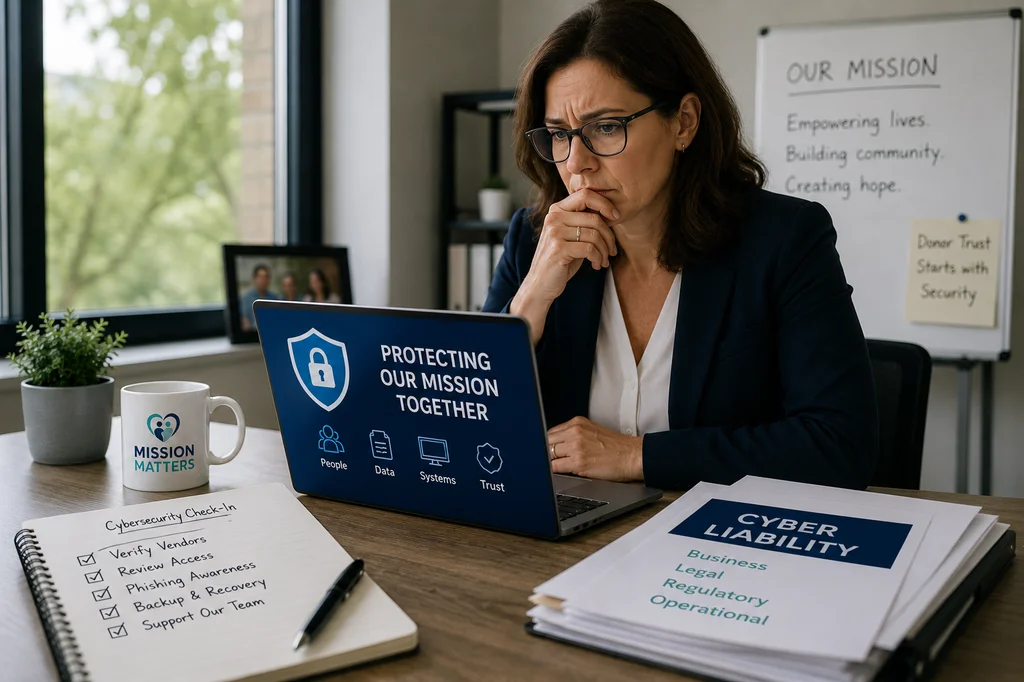
At MTS Consulting Group, we call this cyber liability—the business, legal, regulatory, and operational responsibility every nonprofit has to protect donor information, financial systems, staff, volunteers, and mission-critical technology.
The organizations that avoid costly disruptions aren't simply lucky. They regularly look beneath the surface for hidden risks before they become expensive problems.
Here are three areas every nonprofit should review this summer.
1. Business Email Compromise: When Trust Becomes the Target
One of today's fastest-growing cyber threats doesn't rely on hacking.
It relies on trust.
Business Email Compromise (BEC) happens when cybercriminals impersonate someone your organization already knows—a vendor, executive director, board member, accountant, or trusted service provider.
The email looks legitimate.
The payment request feels routine.
Someone approves the transaction.
Only later does everyone realize the money went somewhere else.
Vacation season creates even more opportunity because payment approvals are often handled by backup staff or temporary decision-makers unfamiliar with normal procedures.
How Nonprofits Can Reduce This Risk
Before approving any financial request received by email:
- Verify changes by phone using a trusted number.
- Confirm banking updates through an established contact.
- Require two-person approval for large transactions.
- Train finance staff to recognize vendor impersonation.
A simple verification process can prevent significant financial loss and reduce cyber liability.
2. Phishing Attacks Target Busy People—Not Careless Ones
Cybercriminals understand human behavior.
They know nonprofit leaders wear many hats.
Executive directors manage staff.
Development teams prepare fundraising campaigns.
Finance departments process grants and donations.
Volunteers rotate in and out.
Attackers create urgency because urgency causes mistakes.
Examples include:
- Microsoft 365 password reset requests
- Unexpected DocuSign notifications
- Fake payroll messages
- Donation platform login alerts
- Wire transfer approvals marked "Urgent"
The strongest defense isn't technology alone.
It's building a culture where people feel comfortable slowing down and asking questions.
Encourage Your Team to Pause When They See
- Unexpected login requests
- Links they weren't expecting
- Urgent payment instructions
- Requests involving donor records
- MFA prompts they didn't initiate
Every pause gives your organization another opportunity to prevent a cyber incident before it begins.
3. Third-Party Vendors Can Increase Cyber Liability
Most nonprofits depend on outside technology providers.
Examples include:
- Donor management platforms
- Payment processors
- Cloud storage providers
- Accounting software
- Volunteer management systems
- Managed IT providers
These relationships are essential—but they also create additional cyber liability.
If one trusted vendor experiences a cybersecurity incident, that exposure can extend into your organization through connected systems or shared credentials.
That's why vendor oversight has become an important part of nonprofit cybersecurity.
Ask Three Simple Questions
- Which vendors can access our systems?
- What donor or financial information can they access?
- Who inside our organization is responsible for managing that relationship?
Outsourcing technology never outsources accountability.
Understanding your third-party relationships protects donor trust, strengthens board confidence, and reduces unnecessary cyber liability.
Why Hidden Cyber Risks Matter to Nonprofits
Most nonprofit cyber incidents don't begin with sophisticated hackers.
They begin with overlooked details.
An inactive account.
An unverified invoice.
A trusted vendor.
A rushed employee.
One unnoticed click.
Over time, those small risks accumulate.
The nonprofits best prepared for today's cybersecurity challenges don't necessarily spend the most on technology.
They simply maintain better visibility.
They regularly review:
- User access
- Vendor relationships
- Financial approval processes
- Employee awareness
- Backup and recovery plans
- Incident response procedures
That clarity protects more than computers.
It protects donor confidence.
It supports grant readiness.
It strengthens board governance.
Most importantly, it protects your mission.
Frequently Asked Questions
What is cyber liability for a nonprofit?
Cyber liability is the business, legal, regulatory, and operational responsibility a nonprofit has for protecting donor information, financial systems, technology, staff, volunteers, and mission-critical operations. It extends beyond cyber insurance and includes the organization's overall responsibility for managing cyber risk.
Why are nonprofits targeted by cybercriminals?
Nonprofits often manage valuable donor information, online payment systems, grant funding, and financial records while operating with limited technology resources. Cybercriminals know many nonprofits have fewer security resources than large enterprises.
What is Business Email Compromise (BEC)?
Business Email Compromise is a cyberattack in which criminals impersonate trusted individuals or vendors to trick employees into transferring money or sharing sensitive information.
How can nonprofits reduce cyber liability?
Organizations can reduce cyber liability by reviewing user access, strengthening phishing awareness, testing backups, implementing multi-factor authentication, reviewing vendor security, and regularly assessing overall cyber risk.
Your Mission Deserves More Than Good Luck
Your nonprofit exists to serve your community.
Protecting that mission shouldn't depend on hoping nothing goes wrong.
At MTS Consulting Group, we help nonprofit leaders understand cyber liability in plain language, identify hidden risks before they become costly problems, and provide the guidance boards, funders, and leadership teams need to move forward with confidence.
We believe cybersecurity should empower your organization—not overwhelm it.
That's what it means to be your Beacon in the Cyber Storm™.
Schedule Your Complimentary Discovery Call
If you're unsure whether hidden cyber risks are quietly increasing your organization's exposure, let's have a conversation.
Our complimentary 10-minute Discovery Call will help you better understand your current cybersecurity posture, identify opportunities to reduce cyber liability, and provide practical next steps tailored to your nonprofit.