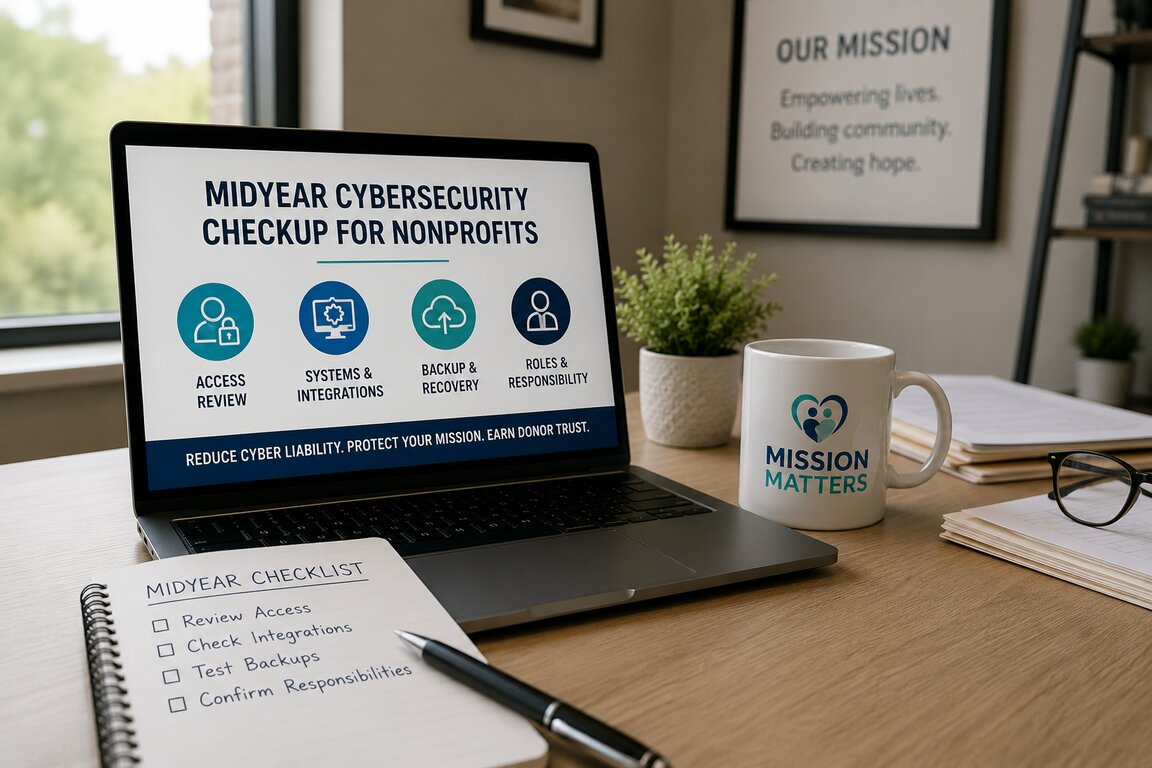
Technology changes quickly. Cyber liability changes even faster.
If your nonprofit has grown, hired staff, added volunteers, implemented new software, or expanded online fundraising since January, your organization's cyber liability has likely changed too.
Many nonprofit leaders assume their technology is still as secure as it was six months ago. Unfortunately, assumptions are where hidden risks often begin.
At MTS Consulting Group, we define cyber liability as the business, legal, regulatory, and operational responsibility your organization carries for protecting its technology, donor information, financial systems, and mission-critical operations.
The good news? A simple midyear review can uncover small issues before they become expensive disruptions.
Why Every Nonprofit Should Perform a Midyear Cybersecurity Review
Technology never stays the same.
Since January, your organization may have:
- Added new employees or volunteers
- Adopted new fundraising or donor management software
- Expanded cloud applications
- Changed vendors
- Increased remote or hybrid work
- Added new board members with system access
Each change improves your ability to serve your mission—but each one can also increase cyber liability if it isn't reviewed.
Cybersecurity isn't just about preventing hackers.
It's about protecting donor trust, ensuring operational continuity, strengthening board confidence, and demonstrating responsible stewardship of the people who depend on your organization.
1. Who Has Access to Your Systems Today?
One of the biggest cybersecurity risks nonprofits face isn't sophisticated malware.
It's unnecessary access.
Throughout the year, organizations grant access to:
- New employees
- Volunteers
- Temporary contractors
- Board members
- Consultants
- Vendors
Very few organizations routinely remove permissions once projects end or roles change.
That can leave:
- Former employees with active accounts
- Volunteers who still have access
- Staff members with permissions beyond their responsibilities
- Donor information exposed to unnecessary risk
Ask Yourself
Could your leadership team identify everyone who currently has access to donor information, financial records, Microsoft 365, and cloud applications?
If answering that question takes longer than a minute, it's time for an access review.
Reducing unnecessary permissions is one of the simplest ways to reduce cyber liability.
2. Are Your Technology Systems Still Working Together?
Nonprofits often add technology one solution at a time.
Development introduces a CRM.
Finance adopts new accounting software.
Marketing adds email automation.
Programs begin using collaboration tools.
Individually, these decisions make perfect sense.
Collectively, they can create technology silos where information is duplicated, integrations break quietly, and nobody has complete visibility into organizational risk.
Cyber liability often grows gradually—not because technology fails, but because no one is responsible for seeing the whole picture.
Ask Yourself
Do your technology systems support your staff—or has your staff quietly learned to work around them?
When employees create manual workarounds, it usually signals that your technology deserves a second look.
3. Could Your Organization Recover From a Cyberattack?
Nearly every nonprofit says they have backups.
Far fewer regularly test them.
Whether the threat is ransomware, accidental deletion, hardware failure, or a cloud outage, the real question isn't whether backups exist.
It's whether your organization can recover quickly enough to continue serving your community.
A successful recovery plan answers questions like:
- How long would restoration take?
- Who leads the response?
- Who communicates with leadership and the board?
- Who contacts cyber insurance?
- How do we continue serving our mission?
Backups protect data.
Recovery planning protects your organization.
Those are not the same thing.
4. Does Everyone Know Who Owns Technology Decisions?
As nonprofits grow, responsibilities naturally become shared.
Internal staff.
Outside IT providers.
Cloud vendors.
Software companies.
Cyber insurance providers.
Board committees.
Without clear ownership, important issues often bounce between multiple organizations before anyone takes action.
When a cyber incident occurs, uncertainty costs valuable time.
Clear accountability reduces operational disruption and lowers cyber liability.
Ask Yourself
If your donor database became unavailable tomorrow, would everyone know exactly who is responsible for restoring operations?
If not, your organization has an opportunity to strengthen its resilience.
Most Cyber Liability Comes From Unreviewed Change
Contrary to popular belief, cyber incidents rarely happen because one dramatic event suddenly appears.
More often, they result from dozens of small changes that were never revisited.
New users.
New software.
New vendors.
New permissions.
New devices.
Over time, those changes quietly increase organizational exposure.
The nonprofits best prepared for today's cybersecurity challenges don't necessarily spend more money.
They simply maintain better visibility.
They know:
- Who has access
- Where donor data lives
- Which vendors support each system
- How quickly they can recover
- Who is responsible when something goes wrong
That clarity protects donor trust, strengthens board governance, improves grant readiness, and helps ensure your mission continues—even when unexpected events occur.
Frequently Asked Questions
What is cyber liability for a nonprofit?
Cyber liability is the business, legal, regulatory, and operational responsibility an organization has for protecting donor information, financial data, staff, volunteers, technology systems, and mission-critical operations. It extends far beyond insurance or regulatory compliance.
How often should nonprofits review cybersecurity?
Most cybersecurity professionals recommend reviewing access permissions, backup testing, technology vendors, and overall cyber risk at least twice each year, with continuous monitoring throughout the year.
Why is cybersecurity important for nonprofits?
Nonprofits manage sensitive donor information, financial transactions, grant data, and community services. A cyberattack can interrupt operations, damage donor confidence, delay fundraising, and expose the organization to significant cyber liability.
What's the first step to reducing cyber liability?
Start with understanding where your organization stands today. A technology assessment can identify hidden risks before they become costly disruptions.
Protect Your Mission Before Small Technology Changes Become Big Problems
At MTS Consulting Group, we believe nonprofit leaders shouldn't have to become cybersecurity experts to confidently protect their organizations.
Our role is to serve as your Beacon in the Cyber Storm—helping you understand your cyber liability, reduce unnecessary risk, and give your board the confidence that your technology is supporting your mission, not threatening it.
Schedule Your Complimentary Discovery Call
If you'd like a clear picture of where your nonprofit stands today, schedule a complimentary 10-minute Discovery Call.
We'll discuss your current technology, identify areas worth reviewing, and help you determine practical next steps—without technical jargon or sales pressure.
👉 Schedule your Discovery Call: https://mtscybersecure.net/beacon