 🎯 Introduction: Holiday Scams Are the Gift No Business Wants
The holiday season brings clients, deadlines, and celebration — but also a surge in cyberattacks and digital scams targeting small and midsize businesses.
In December, one company learned this lesson the hard way.
A quick text from a “CEO” asking for Apple gift cards turned into a $3,000 loss — and a reminder that even trusted communication channels can be manipulated.
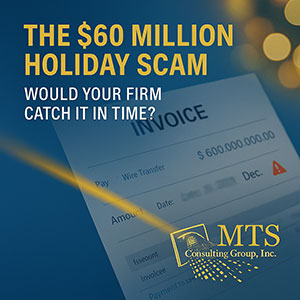
That same month, Orion S.A., a European manufacturer, lost $60 million through a sophisticated business email compromise (BEC) scam. What looked like routine payment requests turned out to be perfectly disguised wire transfer fraud.
These incidents are becoming common — especially during the holidays, when employees are busy, distracted, and processing a flood of transactions.
🧾 What Holiday Scams Mean for Accounting and Tax Firms
Your firm may not move millions in a single transaction, but every day you handle sensitive financial data and client funds. That makes you a prime target.
In 2024, 73% of cyber incidents involved email-based fraud, and gift card scams alone cost U.S. businesses more than $217 million.
Cybercriminals exploit the very habits that make firms efficient — trust, quick response times, and routine digital communication.
Each of those habits adds to your firm’s cyber liability — the legal, financial, and reputational risks that come when systems or data are compromised.
🚨 Five Holiday Scams Every Firm Should Watch For
1️⃣ “Your Boss Needs Gift Cards” – The $3,000 Trap
Fraudsters pose as partners or executives asking employees to buy and send digital gift cards “for clients.”
✅ Prevention: Create a written gift card policy and require dual approval.
2️⃣ Invoice & Payment Switch-Ups
Attackers hijack email threads, sending “updated banking details” for vendors.
✅ Prevention: Verify all account changes by phone using trusted numbers.
3️⃣ Fake Shipping & Delivery Notices
Phishing emails mimic FedEx, UPS, or USPS with fake tracking links.
✅ Prevention: Train staff to visit carrier sites directly instead of clicking links.
4️⃣ Malicious “Holiday Party” Attachments
Emails with names like Holiday_Schedule.pdf or Party_List.xls can install malware when opened.
✅ Prevention: Block macros and make verifying unexpected attachments a habit.
5️⃣ Bogus Charity or Fundraiser Campaigns
Cybercriminals impersonate charities or set up fake “company match” drives.
✅ Prevention: Publish an approved charity list and use verified donation platforms.
🧠 Why These Attacks Work
The biggest misconception? That cyberattacks are about technology.
In reality, they’re about behavior.
Scammers use social engineering — urgency, familiarity, and fear — to trick even the most cautious employees.
That’s why tools like multifactor authentication (MFA) and phishing simulations reduce your risk dramatically.
- MFA prevents over 99% of account compromises.
- Regular awareness training reduces phishing success rates by up to 60%.
These steps don’t just protect your systems — they demonstrate due diligence, a key factor in limiting your cyber liability exposure and maintaining insurance eligibility.
✅ Your Holiday Cyber Liability Checklist
Before your firm signs off for the season, review these five steps:
- Two-Person Verification Rule: Require a verbal confirmation for all wire transfers or financial changes over a set threshold.
- Gift Card Policy: Make it written and enforceable.
- Vendor Validation: Confirm any new banking information by phone.
- MFA Everywhere: Add an extra layer of authentication on email, financial apps, and cloud accounts.
- Team Awareness: Take 15 minutes to brief staff on the latest scams.
These aren’t IT tasks — they’re risk management controls that protect your reputation and reduce insurance claims.
💸 The Real Cost of a Holiday Cyber Incident
The Orion breach may have cost $60 million, but the ripple effect of smaller attacks is just as damaging:
- Client trust erodes overnight
- Staff productivity plummets during cleanup
- Insurance premiums spike at renewal
- Regulatory reporting becomes a nightmare
The average business email compromise (BEC) incident costs $129,000 — a loss that can cripple an accounting or tax firm during peak season.
🛡️ Stay Secure, Stay Focused
The holidays should bring growth, not grief.
Cybercriminals thrive on distraction — but you can protect your firm with simple, proactive measures.
A single phone call or policy update could save your business from the next $60 million mistake.
🎁 The Best Gift for Your Firm: Cyber Clarity
Before the year ends, take 26 minutes to uncover your firm’s hidden risks.
Our Credential-Free Cyber Risk Assessment helps you identify your largest cyber liability exposures — without sharing logins or causing downtime.
👉 Schedule your complimentary Cyber Risk Assessment today:
https://mtsconsultinggroup.net/riskassessment
MTS Consulting Group — Your Beacon in the Cyber Storm.