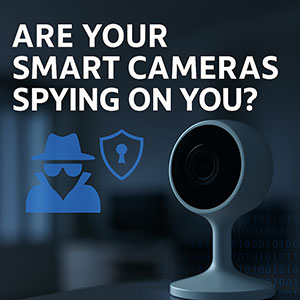
 In 2020, a Mississippi family woke up to a nightmare. Their eight-year-old daughter heard a stranger’s voice coming from her bedroom—through the smart camera mounted on her wall. The intruder had hacked into their Ring account and began taunting her until her parents unplugged the device.
The cause? A reused password from an old breach.
Incidents like this are unsettling—but not rare. Smart cameras and connected devices have exploded in popularity among homeowners, small businesses, and nonprofits. They’re convenient, affordable, and easy to install. For nonprofits, they can help monitor entryways, storage rooms, or after-hours spaces.
But here’s the problem: every connected device also creates a new layer of cyber liability—a set of risks that extend beyond technology and into the very survival of your mission.
Not All Smart Cameras Are Created Equal
Not all cameras—or manufacturers—prioritize security. Low-cost models often skip encryption or delay critical updates. Even reputable brands can leave organizations exposed when users don’t change default settings or passwords.
Hackers actively scan for these vulnerabilities. Default credentials, outdated firmware, and weak Wi-Fi setups are easy invitations for attack.
For nonprofits, the fallout from one compromised camera can go far beyond privacy:
- Business risk: downtime or service interruptions during a breach.
- Legal risk: exposure of donor or client information.
- Regulatory risk: violations of PCI DSS or state data laws.
- Operational risk: lost productivity, staff stress, and shaken confidence.
Every device on your network expands your attack surface—and your liability.
Choose Devices That Protect What You’ve Built
When selecting or reviewing smart cameras, keep security—and stewardship—front of mind:
- Choose reputable brands that issue frequent firmware updates.
- Use cameras that encrypt video before uploading to the cloud.
- Enable multifactor authentication (MFA) for user logins.
- Consider models that support local storage along with secure cloud backups.
These small choices strengthen your protection and prove to funders, insurers, and your board that your nonprofit takes cyber liability seriously.
Setup Matters Just as Much as the Hardware
Even the most secure camera can become a liability if it’s installed with default settings.
Reduce your exposure by following these steps:
- Change default usernames and passwords immediately after setup.
- Enable automatic updates to keep software patched and secure.
- Segment your network: keep smart devices separate from donor databases and finance systems.
- Secure your router: it’s the digital gateway to everything you own.
Remember, one weak link—like a neglected router or outdated firmware—can undo even the best equipment choices.
The Hidden Risks Beyond Cameras
Cameras aren’t the only smart devices posing risks. Doorbells, thermostats, printers, and voice assistants all connect to your network—and can serve as hidden entry points for attackers.
In the nonprofit world, a breach through one “smart” gadget doesn’t just affect convenience. It can compromise sensitive client data, donor records, and years of trust. That’s the true cost of unmanaged cyber liability.
Turn Smart Devices Into Safe Devices
Smart technology can absolutely make your organization more efficient and secure—if configured and maintained properly. The key is visibility: knowing what’s connected, how it’s secured, and how it affects your overall cyber liability.
A few careful steps today can prevent a major breach tomorrow—and help protect the mission you’ve worked so hard to build.
Start Reducing Your Risk Today
Before you plug in another device or connect another camera, take a moment to make sure your systems are working for your mission—not against it.
👉 Begin with a Complimentary Cyber Risk Assessment: https://mtsconsultinggroup.net/riskassessment
It’s not a sales call. It’s a guided conversation that helps you see your current risks, understand your cyber liability across business, legal, regulatory, and operational areas, and take the right steps before the next cyber storm hits.
Because when you understand the storm, you can finally navigate it with confidence.